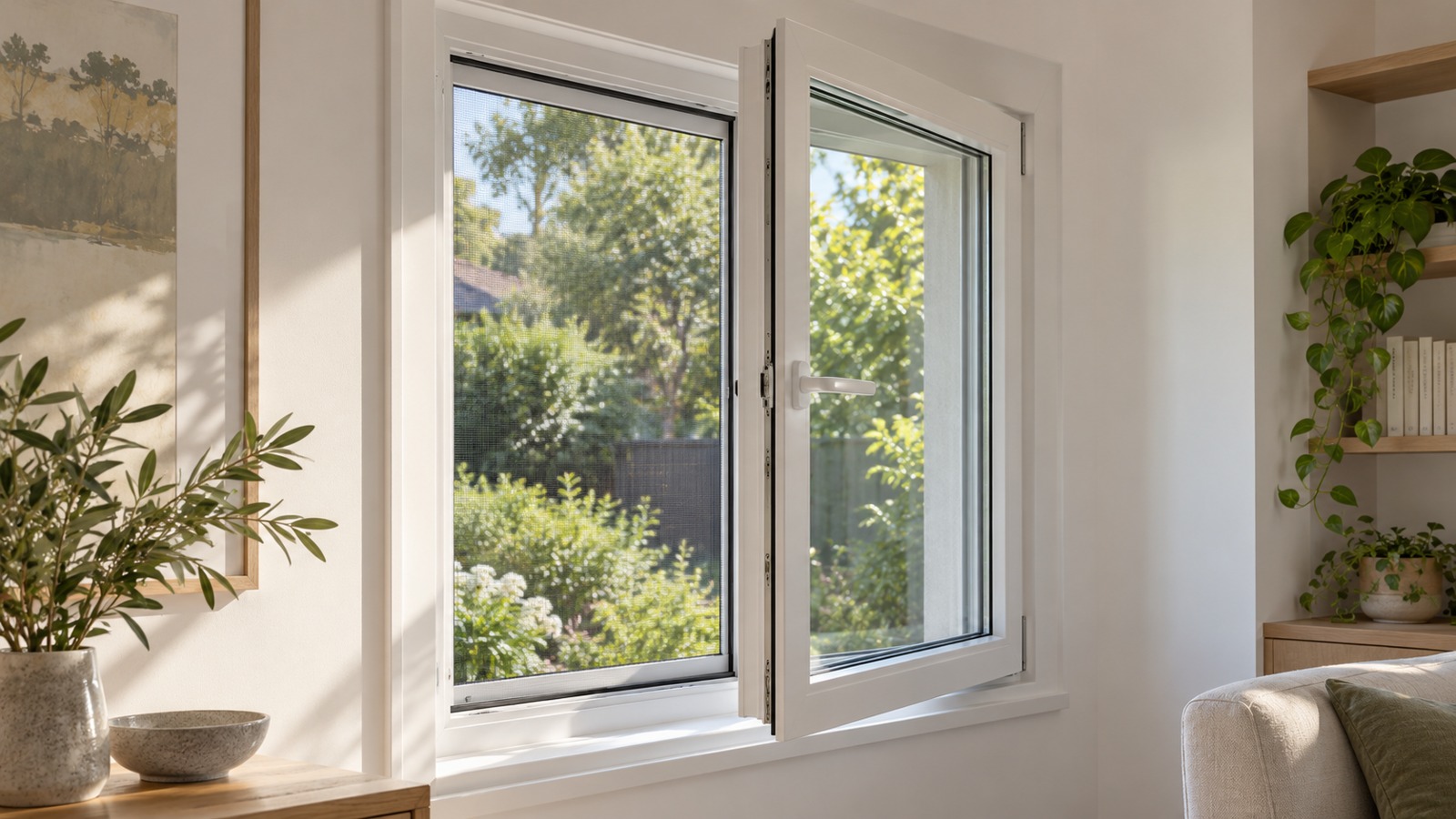
Double glazing does not rule out an insect screen. Compatibility depends on the window frame, the moving sash and access to its handle. Outward-opening windows commonly take an internal screen; inward-opening windows commonly take one outside. Sliding windows can accommodate a separate screen, while fixed glass has no ventilation opening to cover. The exact window and screen system must work together.
Check screen clearance while choosing the windows for your Melbourne home. A screen frame must leave room to reach a winder, and an inward-opening sash needs space inside the room. Resolving both before ordering can avoid choosing a screen that obstructs the window you want.
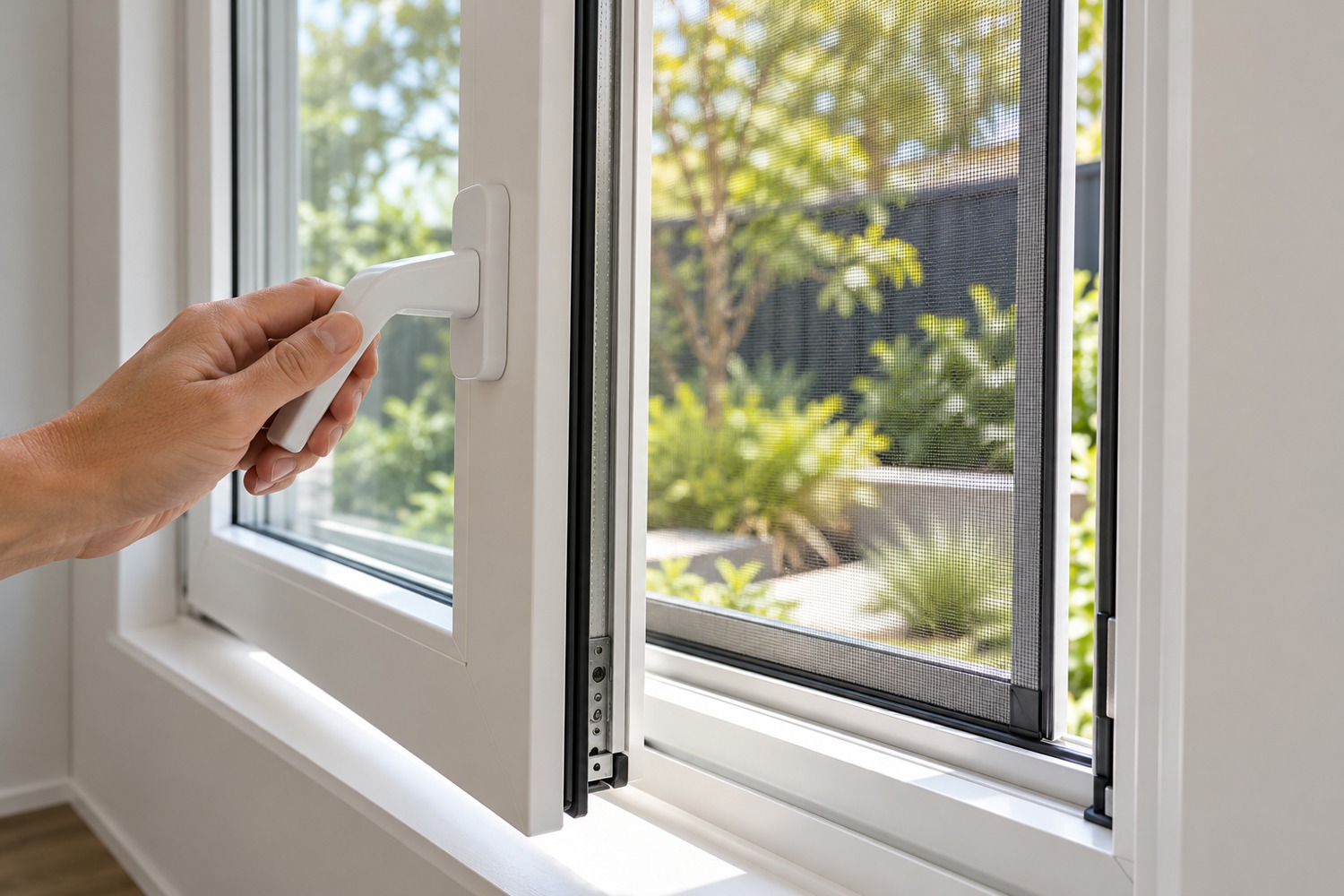
Yes. The two panes and sealed space in double glazing serve a different purpose from an insect screen. A screen can be fitted separately around an opening window. Its fixing arrangement may use the window frame or the reveal, the lined opening around it. That arrangement must suit the actual window, rather than the glass specification alone.
uPVC is unplasticised polyvinyl chloride, the rigid plastic used for modern window frames. The sash is the part of the window that moves when you open it.
Check the space needed by the sash and handle. It must allow the intended opening movement, leave the handle in reach and provide a safe cleaning method. Any required opening restrictor must still work as intended.
Start with the direction the sash moves, then check the frame and hardware.
| Window style | Sash movement | Screen position to check | Access or clearance issue |
|---|---|---|---|
| Tilt and turn | Top tilts in; side swings in | Commonly outside | Full sash movement and handle access |
| Casement | Side-hinged, swings outwards | Commonly inside | Crank or handle access; safe screen cleaning |
| Awning | Top-hinged, bottom pushes out | Commonly inside | Operating the crank or handle |
| Sliding | Slides sideways along a track | A separate outer screen is one option | Lock access and the actual track layout |
| Fixed | Does not open | No insect screen for ventilation | No openable gap |
That is a starting point, not a guarantee. The frame, hinges and hardware on your own window decide what fits.
Check how the tilt-and-turn sash moves in both modes. Its top tilts inward for ventilation, and the sash swings inward from the side. An outside screen can keep clear of that movement. Handle access, cleaning and any blinds still need checking on the chosen arrangement.
For outward-opening casement windows and awning windows, an internal screen can keep clear of the outward swing. The screen must also leave the crank or handle usable. Check its full operating movement, not just whether you can reach it with the window shut.
A sliding sash moves sideways instead of projecting into the room or outside. A separate outer mesh panel is one arrangement, described in the post on uPVC sliding windows. The screen does not necessarily slide or share the sash’s track; confirm the actual frame and access points.
Mesh is the woven material across the screen. Yarn thickness, spacing and material affect visibility, airflow and strength.
Fibreglass and aluminium are two available mesh materials. Compare the particular products rather than assuming one material always gives a clearer view or greater durability. Construction matters alongside the material name.
Finer mesh does not automatically mean less airflow. One manufacturer describes using finer yarns in a tighter mesh to improve both ventilation and clarity. It also explains that product design can compensate for the lower strength of finer yarns. That is a product-specific result, not a promise that every fine mesh will perform the same way.
A pet-resistant insect mesh is not automatically a tested security screen. An ordinary flyscreen is also not fall protection; do not rely on one to prevent a child falling from an open window.
A retractable screen can be drawn across the opening and stored away when not in use. A roller type stores mesh in a housing called a cassette. Other systems use pleated mesh, which folds back rather than rolling into a tube.
Suppliers publish different fitting arrangements, including within the reveal or on the outside. Some offer made-to-measure retrofit systems. Check the chosen system against your window before ordering.
A fixed screen keeps mesh across the opening without a retracting mechanism. Check how its frame can be accessed for cleaning; fixed in use does not necessarily mean permanently attached.
Consider retractable screening where you need access through the opening or want the mesh stored away when the window is shut. It still needs clearance for its housing, tracks and operation. An outside installation may help access to the glass, but the exact system decides how it is cleaned.
A cassette needs space at the head or side of the opening. Plan that space with the frame and any blinds. Compare the actual maintenance requirements rather than assuming a retractable or fixed design is always cheaper or lasts longer.
For the separate pass-through case, see servery-window screening.
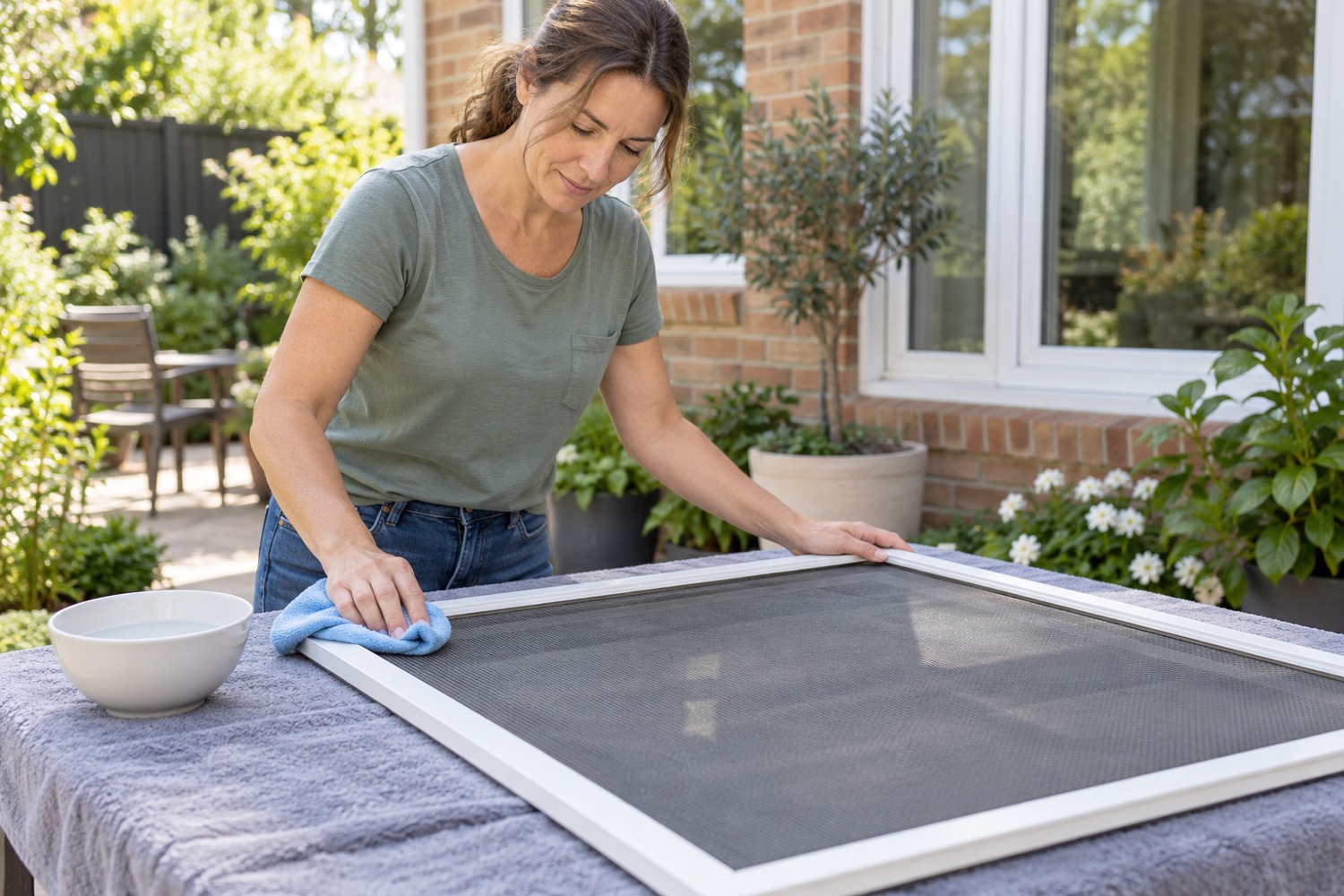
Use the installed screen maker’s cleaning instructions. Methods differ: one manufacturer advises water only for its metal products, and a mild soapy solution without hard scrubbing for its vinyl products. That does not establish a cleaning method for every screen.
Before starting:
Do not substitute a pressure washer, abrasive pad or strong cleaner for the specified method.
Do not lean out of an upstairs window or remove a screen where doing so creates a fall risk. Inward-opening glass can be reached from inside, but that does not make the external screen accessible. Keep safety devices intact and arrange suitable help if access is unsafe.
For a new window order, include screen clearance in the window schedule, the list of openings and window types for the project. Record which way each sash moves, how you reach its handle and where the screen hardware can fit. This lets the window and screen suppliers work from the same arrangement before manufacture.
For a new order, send your plans to Weatherall Windows and discuss the chosen window opening before manufacture. Keep any screen-system choice coordinated with that opening.
No. There is no gap to screen, because the sash does not move. Put the screens on the windows that open.
Screen material and construction affect visibility and airflow. Compare the actual mesh products; a finer thread or tighter weave alone does not predict the result for every design.
Some screen systems can be retrofitted. Suitability depends on the existing frame, hardware, opening movement and available space. Confirm the proposed system rather than assuming every older window can be screened.