
Most window types need space on at least one side of the frame to open properly. Casement windows swing outward. Awning windows hinge at the top and push out at the bottom. Both work well in the right setting, but both need clearance that is not always available.
Sliding windows work differently. The sashes move horizontally along a track, staying within the plane of the wall. Nothing projects inward or outward when the window is open. That single difference makes them the better choice in a surprising number of Australian homes.
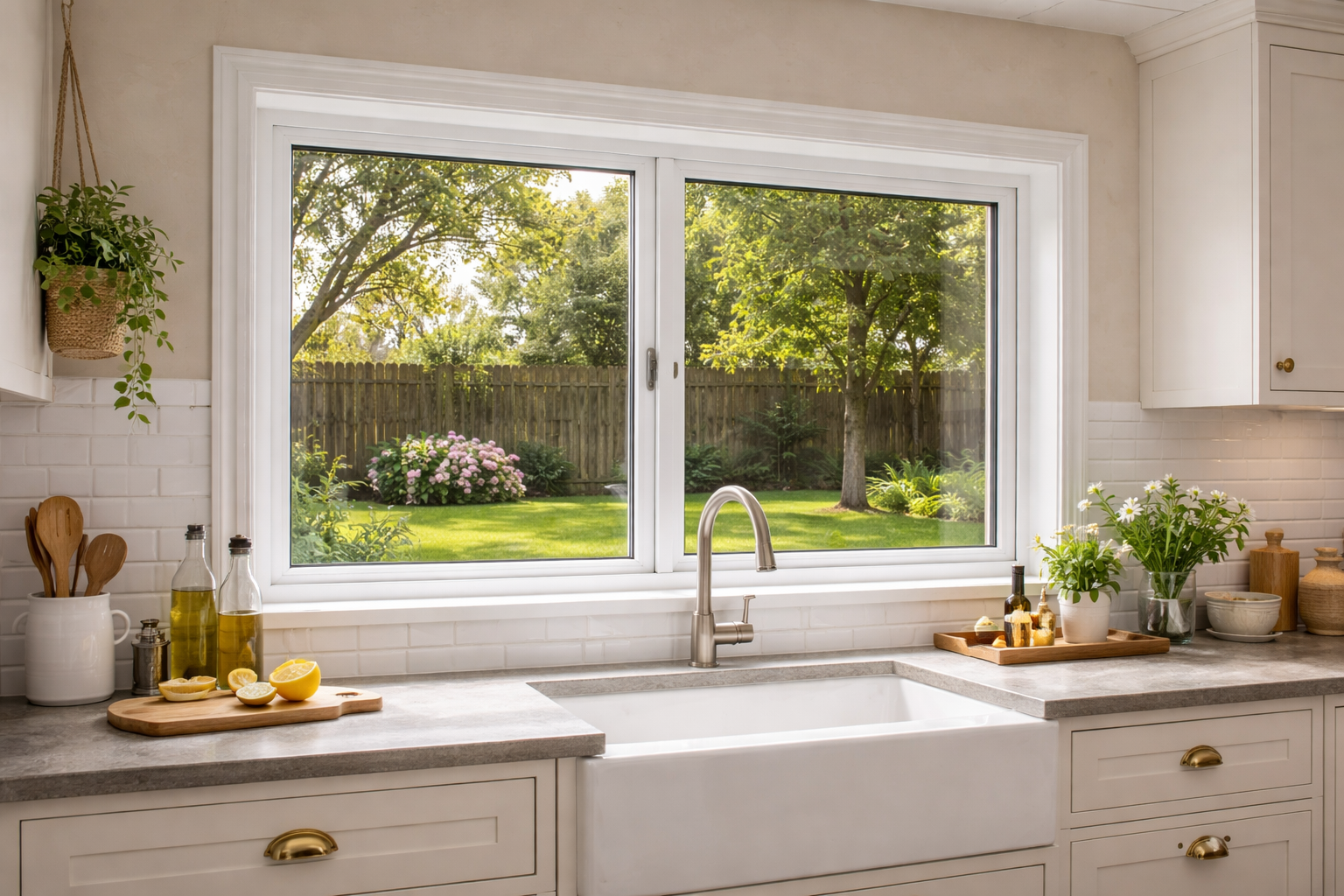
Side passages are a good example. In many Australian house plans, bedrooms and bathrooms sit along narrow side setbacks where a hinged window would swing into a path, a fence, or a neighbouring wall. A sliding window opens without entering that space at all.
The pattern is consistent across several common situations:
The common thread is simple. Wherever the space immediately inside or outside the window is already in use, a slider is worth considering.
A casement window can open to its full width, catching side breezes and directing air into a room. A sliding window typically opens to half its frame width, sometimes a little more depending on the configuration.
That sounds like a limitation, and in some rooms it is. But partial opening has practical advantages too. In a bedroom, a half-open window still ventilates the room overnight without creating a wide, fully exposed opening. In a kitchen, a controlled gap clears steam and cooking odours without turning the room into a wind tunnel on a gusty day.
The airflow from a sliding window is steady rather than dramatic. For rooms where moderate, consistent ventilation matters more than maximum throughput, that is a better fit than a fully hinged opening.
Hinged windows become heavy and unwieldy as they get wider. A large casement sash puts a lot of weight on its hinges and needs a wide arc of clearance to open. Awning windows have similar physical limits at scale.
Sliding windows handle width well. Because the sash weight sits on the track rather than hanging from hinges, wider panels remain easy to operate. This makes sliders a natural choice for living rooms, family rooms, and open-plan spaces where a broad window is part of the design.
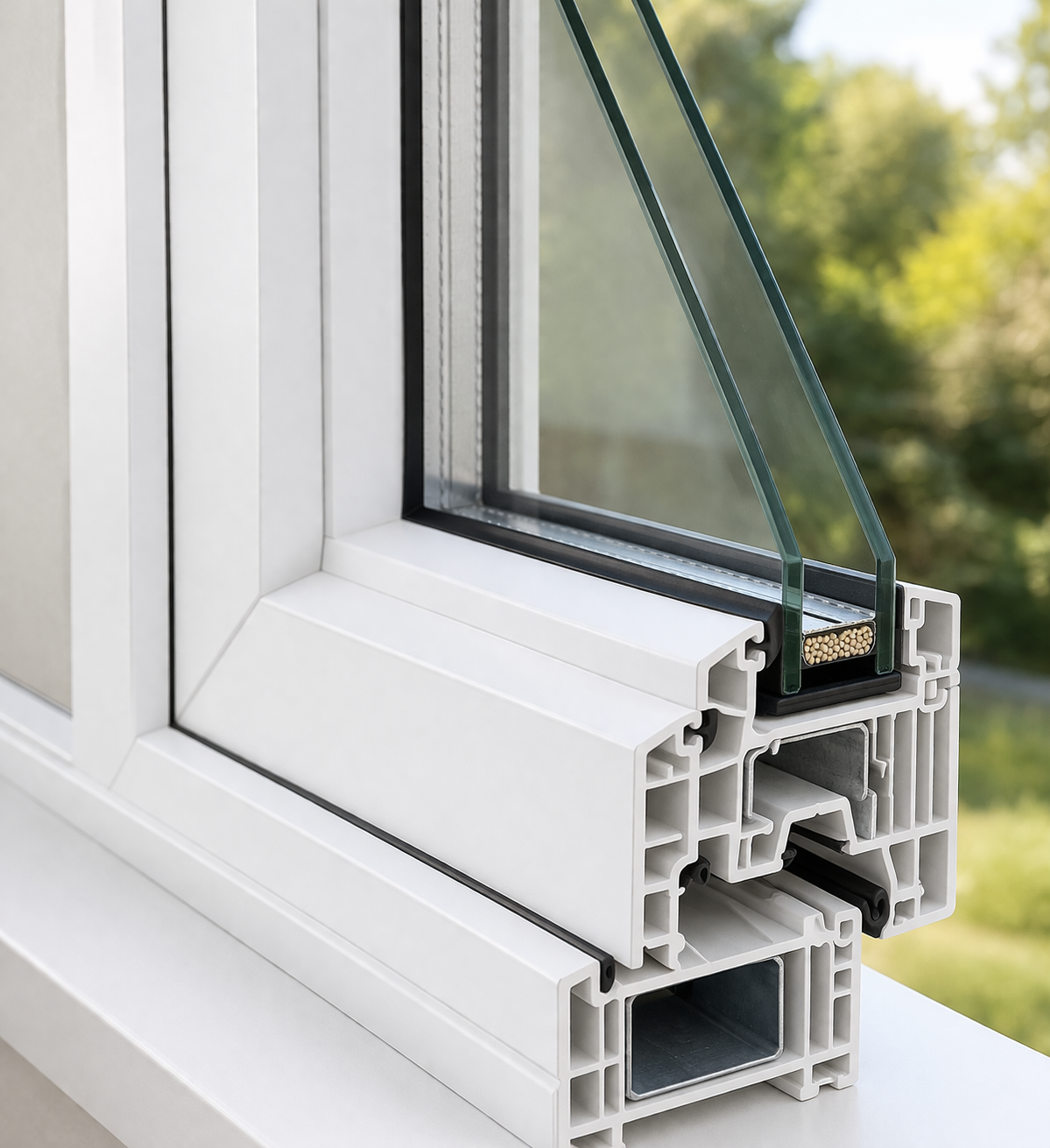
With uPVC frames and double glazing, wider sliding windows also hold their thermal and acoustic performance across the full span. The frame material does not warp, twist, or conduct heat the way aluminium does, so a large sliding window can perform just as well as a smaller one.
Sliding windows pair easily with flyscreens. A fixed mesh screen can sit on the outer track while the sash slides behind it, keeping insects out without interfering with the opening mechanism. In most parts of Australia, flyscreens are a standard expectation rather than an optional extra, so this matters.
Security depends on hardware rather than window type. Modern sliding windows use multi-point locking systems that engage at several positions along the frame. When properly installed, they meet the same security standards as hinged alternatives.
Day-to-day operation is simple. There is no winding mechanism, no friction stay to adjust, and no risk of the sash catching in the wind. The window slides open, stays where it is put, and slides closed again. For households with older residents or children, that simplicity has real value.
Sliding windows are not the right answer everywhere. A few practical points are worth weighing up:
None of these are reasons to rule sliders out. They are reasons to match the window type to the room.
| Sliding | Casement | Awning | |
|---|---|---|---|
| Opening style | Horizontal along a track | Side-hinged, swings outward | Top-hinged, pushes out at the bottom |
| Typical opening width | Around half the frame | Full frame width | Partial |
| External clearance | None | Yes | Yes |
| Best suited to | Wide openings, tight spaces, living areas | Maximum ventilation, catching breezes | Weather protection while ventilating |
| Flyscreen compatibility | Simple, fixed outer screen | Requires internal or retractable screen | Requires internal or retractable screen |
| Maintenance | Track cleaning | Hinge and friction stay checks | Hinge and friction stay checks |
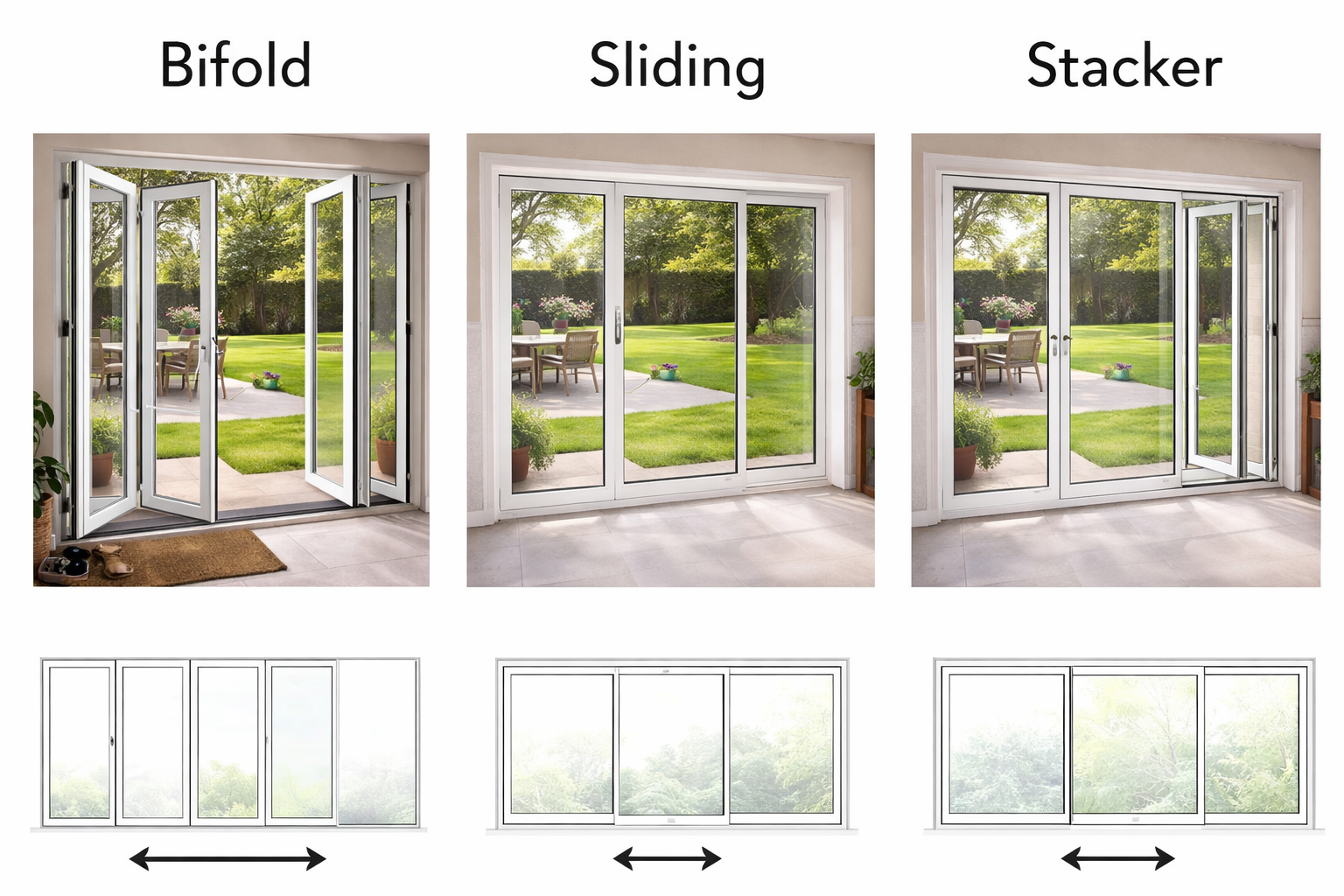
During a renovation, window choices are often shaped by the building rather than by preference alone. Existing openings, wall thickness, external clearances, and room layouts all narrow the options.
Sliding windows tend to suit renovations where the goal is to fit a functional, well-sealed window into a space that does not have room for a hinged sash to swing. They also work well where the homeowner wants a consistent look across several rooms, since sliders sit cleanly in the wall and create uniform sight lines from inside and out.
Where maximum ventilation or weather deflection matters more, casement or awning windows may be the better choice. The decision is not about which type is superior. It is about which one fits the room, the wall, and the way the space is used.
If the layout allows it, mixing window types across a home often gives the best result. Sliders where space is tight, casements where airflow is the priority, and fixed panels where light matters more than ventilation.
Talk to us about what suits your home. We can look at the layout and recommend the right combination.
