
It is the standard Australian barbecue dance. You are in the kitchen prepping the salad. Your guests are outside on the deck.
To get the food out, you have to walk through the living room. You juggle plates. You dodge the dog. You slide the flyscreen door open with your foot. You let a dozen flies in.
There is a reason the Servery Window has become the most requested renovation feature in Melbourne.
It stops the traffic. It connects the cook to the party. It transforms a standard kitchen window into a functional bar.
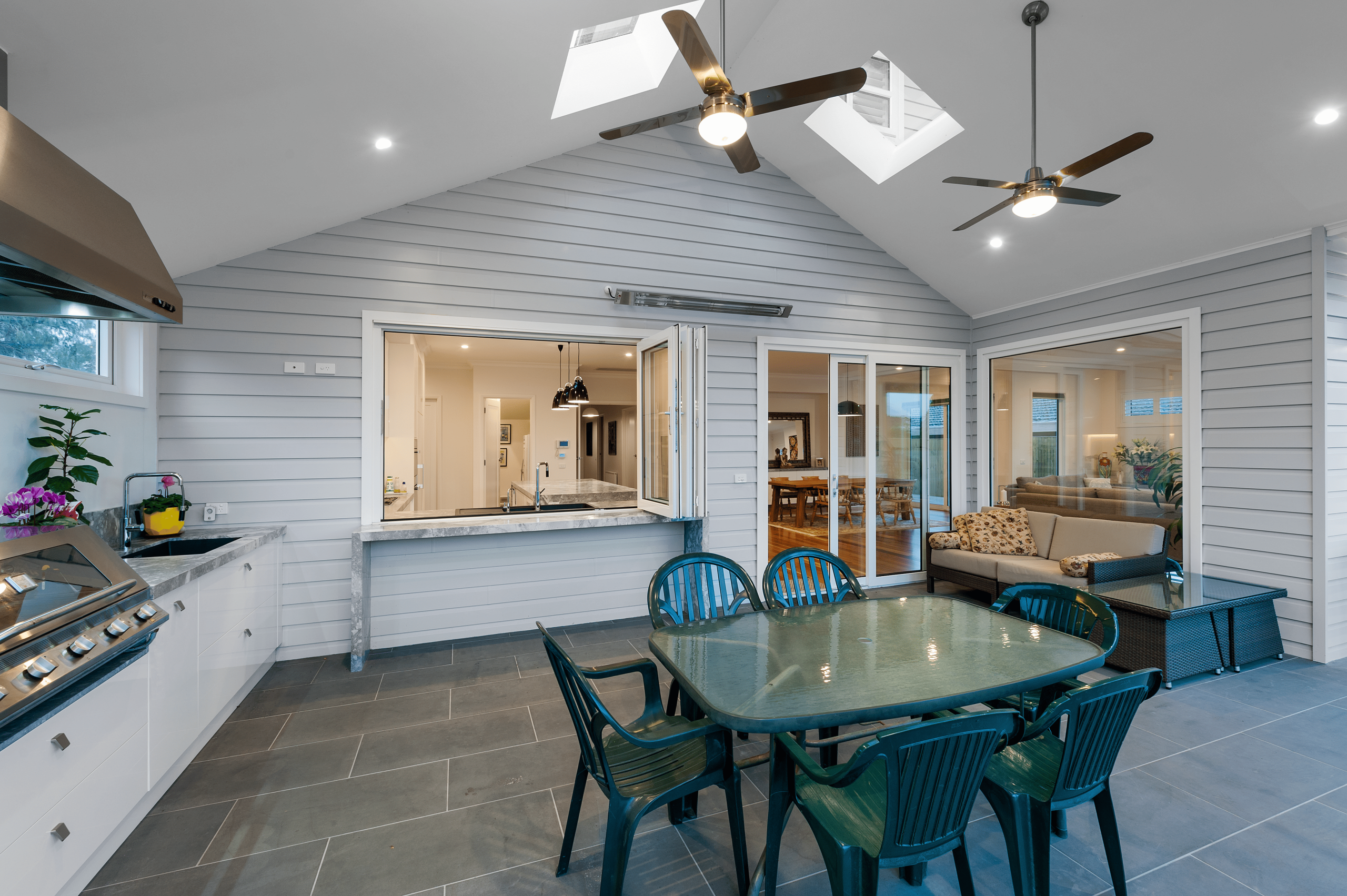
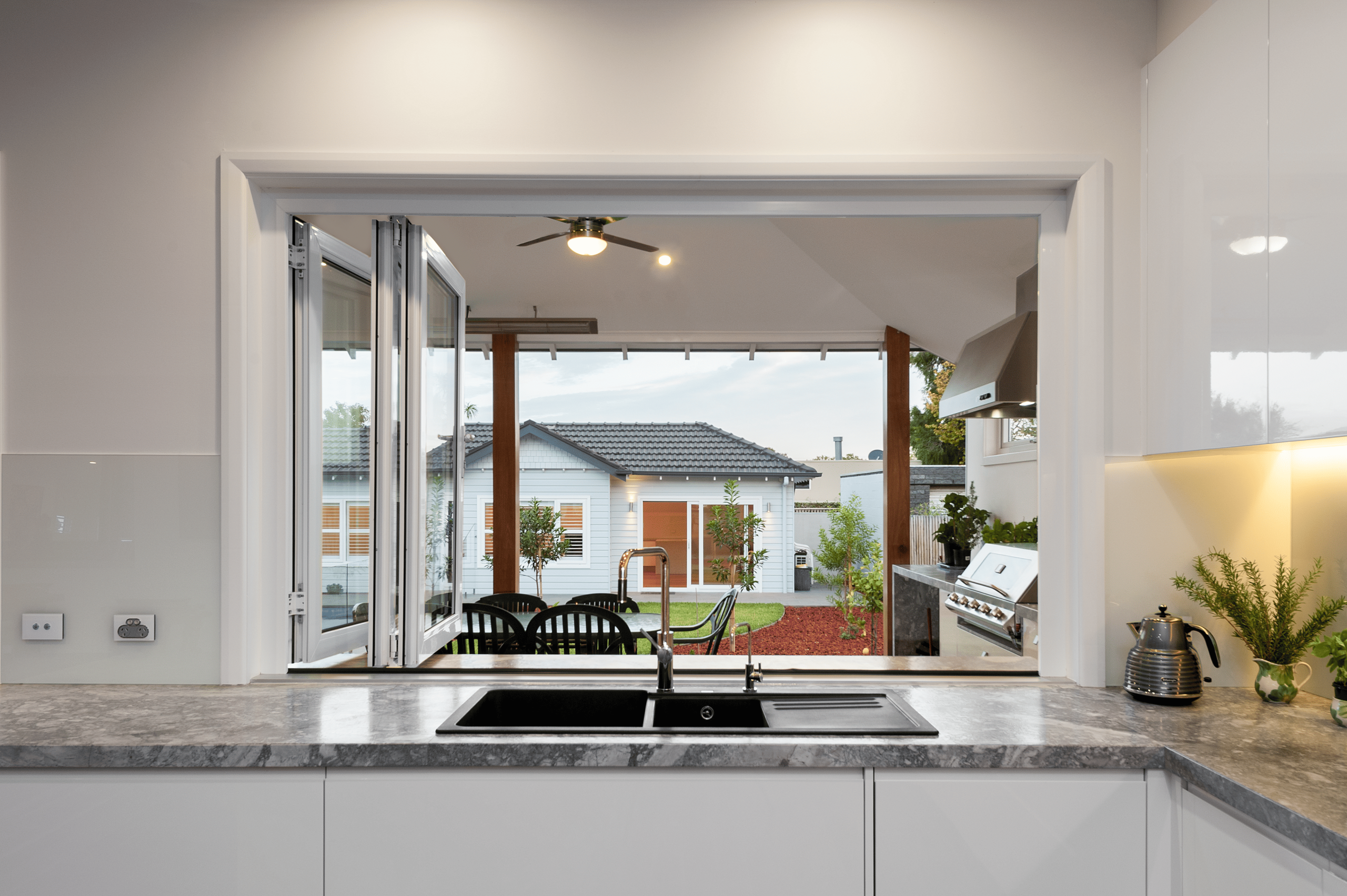
A servery window is wider than a standard window. It is usually installed flush with the benchtop.
When it is closed, it acts like a splashback. It lets light in. When it is open, the kitchen bench becomes an extension of the outdoor table.
You pass platters of meat out. You pass dirty plates back in. You can stand at the sink and talk to your guests outside without yelling through glass. It blurs the line between indoor and outdoor living.
When people imagine a servery, they often picture the "kiosk" style window. These push out from the bottom on gas struts. They look like a food truck.
They look great in magazines. They are often a mistake in Australian homes.
The problem is the insects.
A gas strut window pushes out. This makes it extremely difficult to screen. You often need expensive retractable screens that roll down from the top. These mechanisms can jam. They can leave gaps.
A uPVC Sliding Servery works differently.
It slides horizontally on a track. Because the sash moves sideways, you can install a standard, high-quality flyscreen or security screen on the outside track.
You can have the window wide open. You can smell the barbecue. You can pass drinks through. But the flies stay out.
The kitchen is the engine room of the house. It generates heat from the oven. It generates steam from the stove.
You need a window that seals tight.
Gas strut windows rely on rubber bulb seals that compress when the window pulls shut. Over time, gravity takes over. The seals can warp. Air leaks in.
A uPVC sliding servery uses the same heavy-duty engineering as our sliding doors. The frame is multi-chambered. The seals are robust. When the window is locked, it is airtight.
It keeps the kitchen cool in January. It keeps the heat in in July.
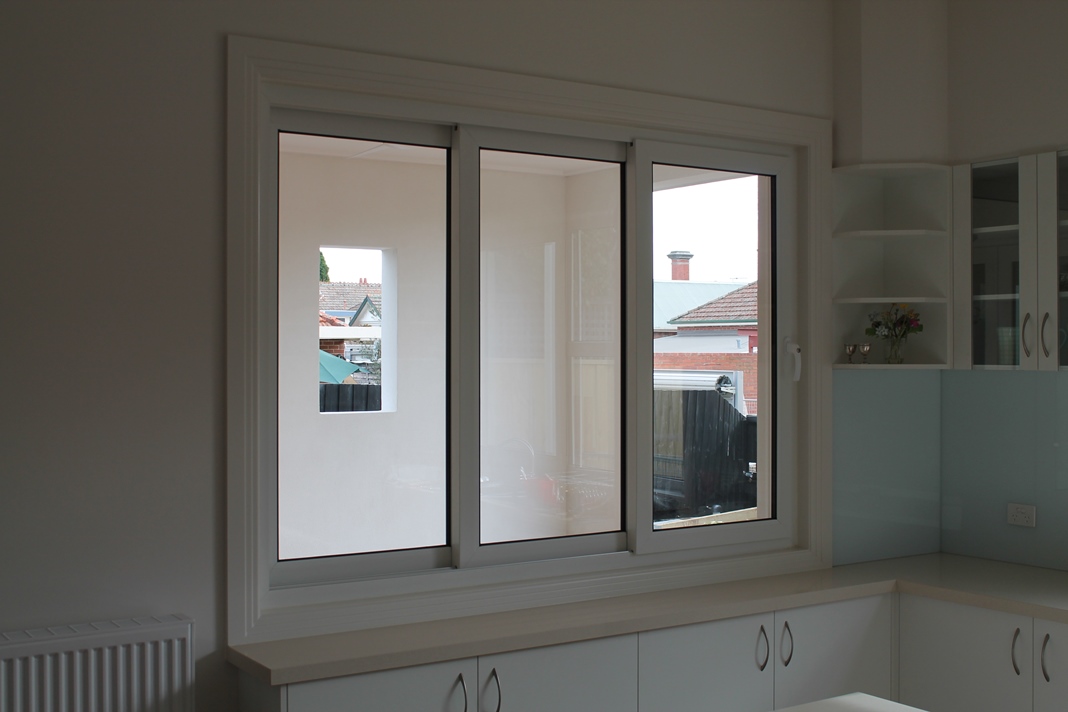
If you have a wide opening, a standard two-panel slider might restrict your space. You only get 50% of the opening clear.
We recommend a Stacker Servery.
This uses three or more panels. They slide and stack neatly behind each other. This gives you an opening that is 66% clear. It creates a massive, unobstructed pass-through area. It feels less like a window and more like a missing wall.
A servery window is more than just glass. It changes the flow of your home.
It stops the bottleneck at the back door. It keeps the insects out of the salad. It makes the cook part of the conversation.
If you are planning a kitchen renovation this summer, look at the wall facing the deck. Don't just put a window there. Put a bridge to the outside.
