Once your new windows are installed, gently check that they open, close and lock using the supplied instructions. Look for damage or unfinished work, and ask about any openings meant to let water drain out. Keep the instructions and paperwork. If something concerns you, note the room, which window it is and the date. Add a photograph where safe, then contact the installer. These checks do not replace a professional inspection.
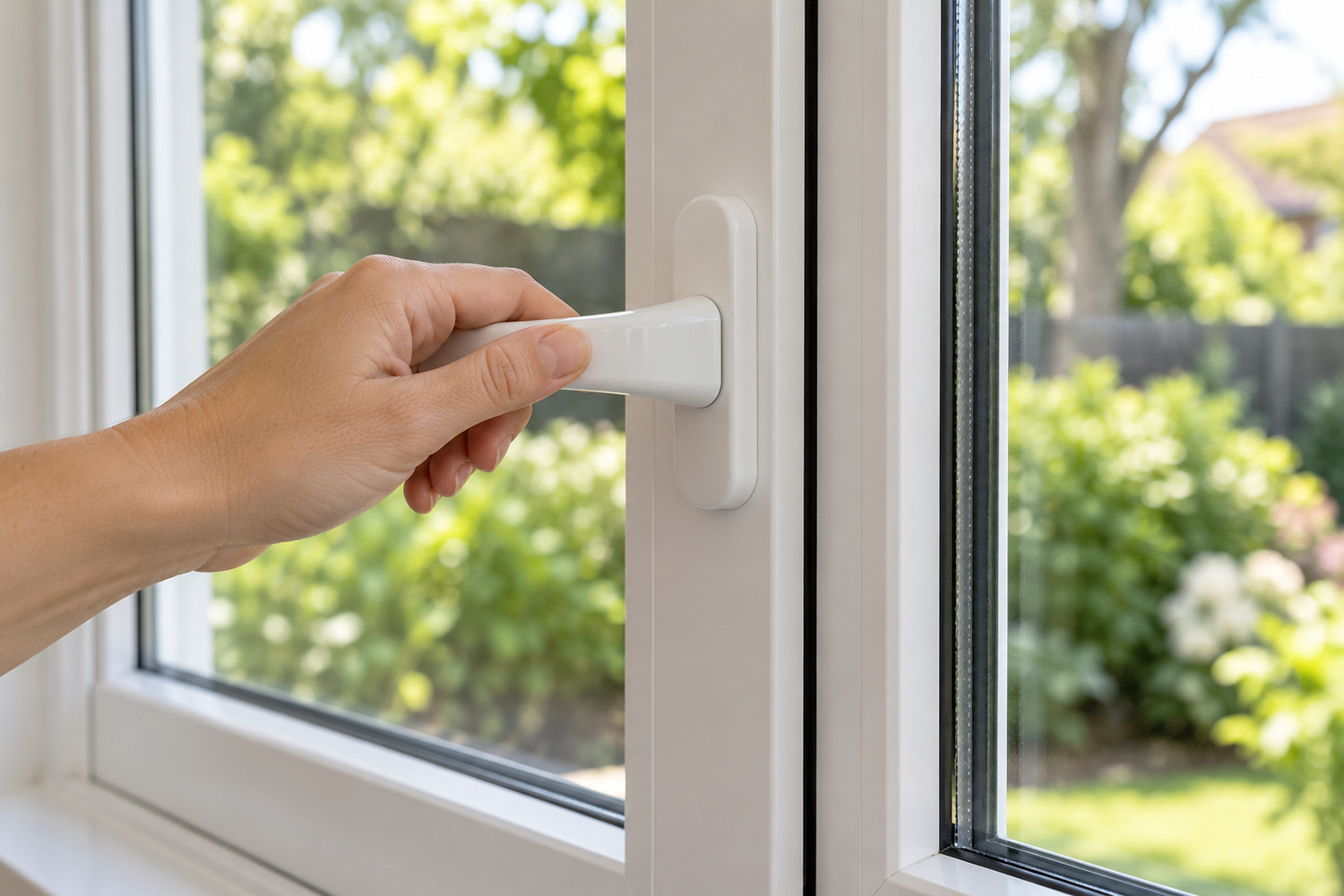
A sash is the moving part of a window. Open, close, lock and unlock each one gently, using the supplied instructions and only its intended modes. Leave any safety restrictor in place.
The test changes with the style. A casement is hinged at one side and swings outward on a crank or handle. An awning sash is hinged at the top and opens outward from the bottom. A tilt and turn has two modes on a single handle: the top tilts inward, and the whole sash swings in like a door. Try the permitted modes according to the supplied instructions and installed safety devices.
Use a light hand and record:
Stop if anything feels unsafe. Do not force, dismantle or adjust the hardware to finish the check.
Leave difficult operation for the installer to assess rather than attempting an adjustment yourself.
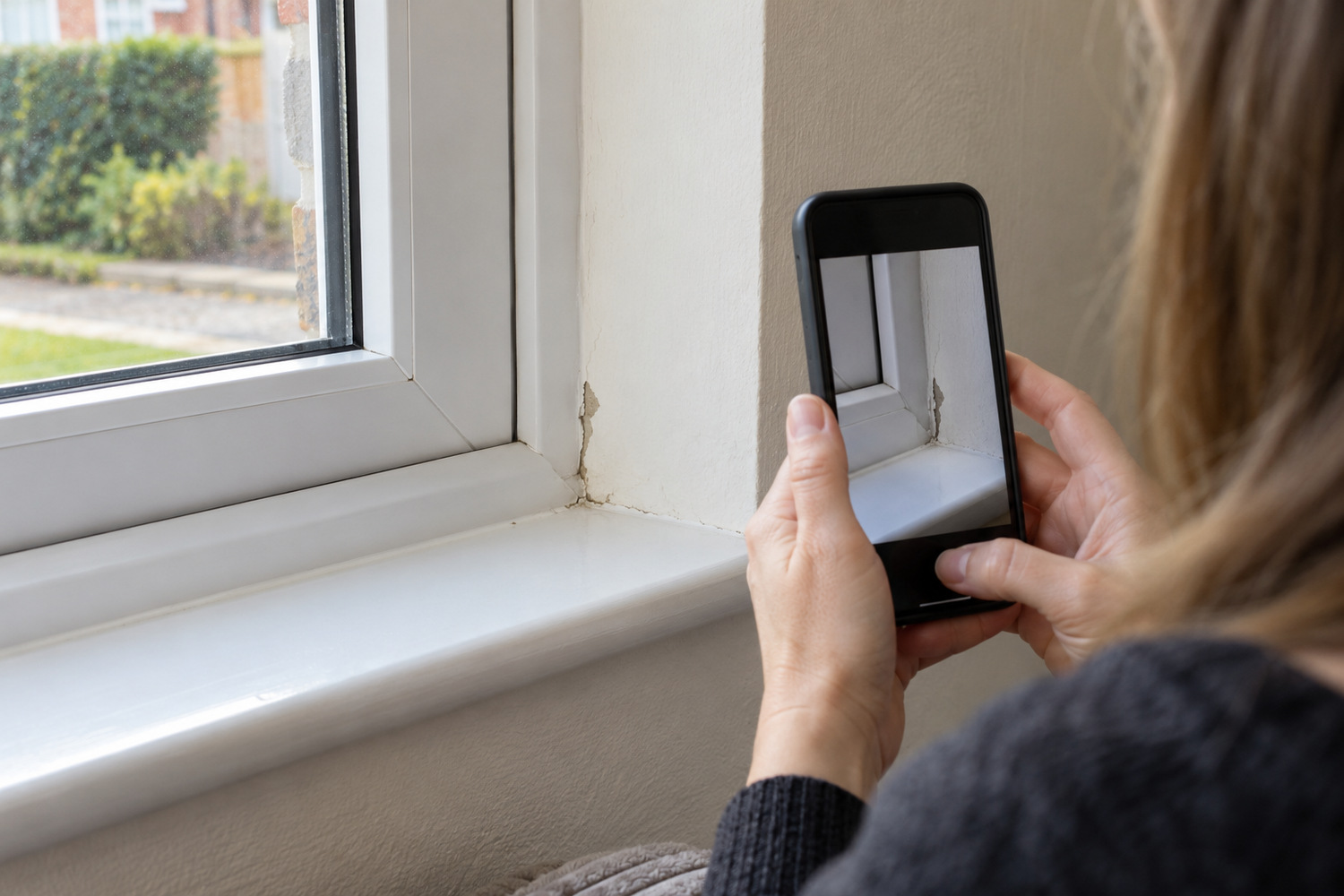
This check compares what you can see against what was quoted.
Look at each frame in daylight. Record chips, scratches, obvious unevenness or a gap that concerns you. Check the surrounding wall finishes against the agreed installation and making-good work. Making good means repairing the surrounding surfaces affected by the installation. Check whether your agreement includes repairs to plaster, render, timber trims or paint.
Photograph anything you are unhappy with, and name the opening in the same note. Second bedroom, left-hand sash, outside face.
A visible gap needs assessment rather than a guessed cause. You cannot see every support or seal once the surrounding surfaces are finished. Looking at the window cannot establish whether that hidden work is correct.
uPVC is the rigid plastic used for the frame. Some window systems have drainage paths that allow water to leave the frame. The guide to long-term window upkeep describes lower drainage holes on sliding and awning windows. Check the arrangement identified for your particular window.
Look for visible debris or material covering a drainage opening, such as building dust, offcuts, paint or sealant. Check only what you can reach and see safely; do not assume every hole in a track is a drainage slot.
Look only. Do not seal a drainage slot, and do not push a screwdriver or a wire into the frame to clear one. If a slot looks blocked, painted over or filled with silicone, write it down against its opening and raise it.
If water collects or enters the room after rain, record where and when it occurs. A blocked slot is only one possible issue; do not diagnose the cause from water alone.
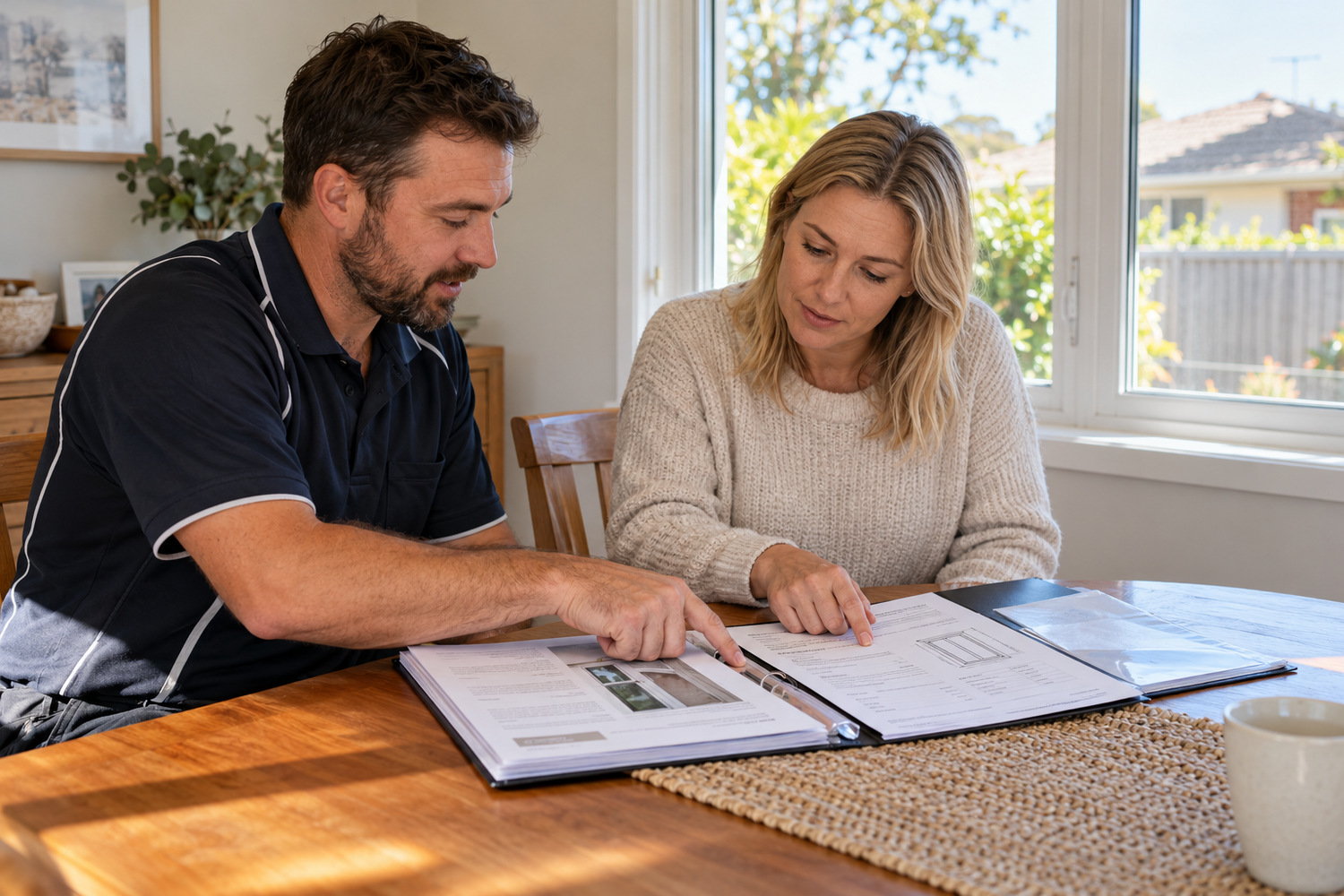
Safety-glass identification and records for the complete window, including its frame, answer different questions. Ask the supplier to explain the records for your actual windows, rather than treating a visible mark as a whole-installation certificate.
For housing work covered by the 2025 Housing Provisions, clause 8.4.8 covers the safety glass identified in Tables 8.4.2 and 8.4.6. It requires permanent etching or a non-reusable label stating the tested standard, registered manufacturer or supplier, grade, nominal (stated) thickness and glass type.
Its explanatory information says the construction label is not intended to remain after completion, but should remain while relevant practitioners confirm and certify the glass. A missing sticker alone does not identify the glass or settle whether it is correct. Do not remove a permanent mark; ask for clarification if the glass cannot be identified.
Visibility markings serve another purpose: making glass easier to see. They do not identify its safety-glass type or replace the required safety glazing.
Keep the window assembly performance records separately from glass identification. Ask the designer or building surveyor which code edition and approval rules apply to your Melbourne project. Victoria’s adoption of NCC 2025 does not mean every existing window must be upgraded.
Keep these together after installation:
Read the warranty document itself rather than a figure quoted on the day.
Then keep one list for the house. Give each item the room, the opening, what you saw and the date, with the photograph attached.
Follow the contract’s agreed inspection and payment process. A homeowner’s observation list does not replace an inspection or certification required by that process, and this checklist sets no payment deadline.
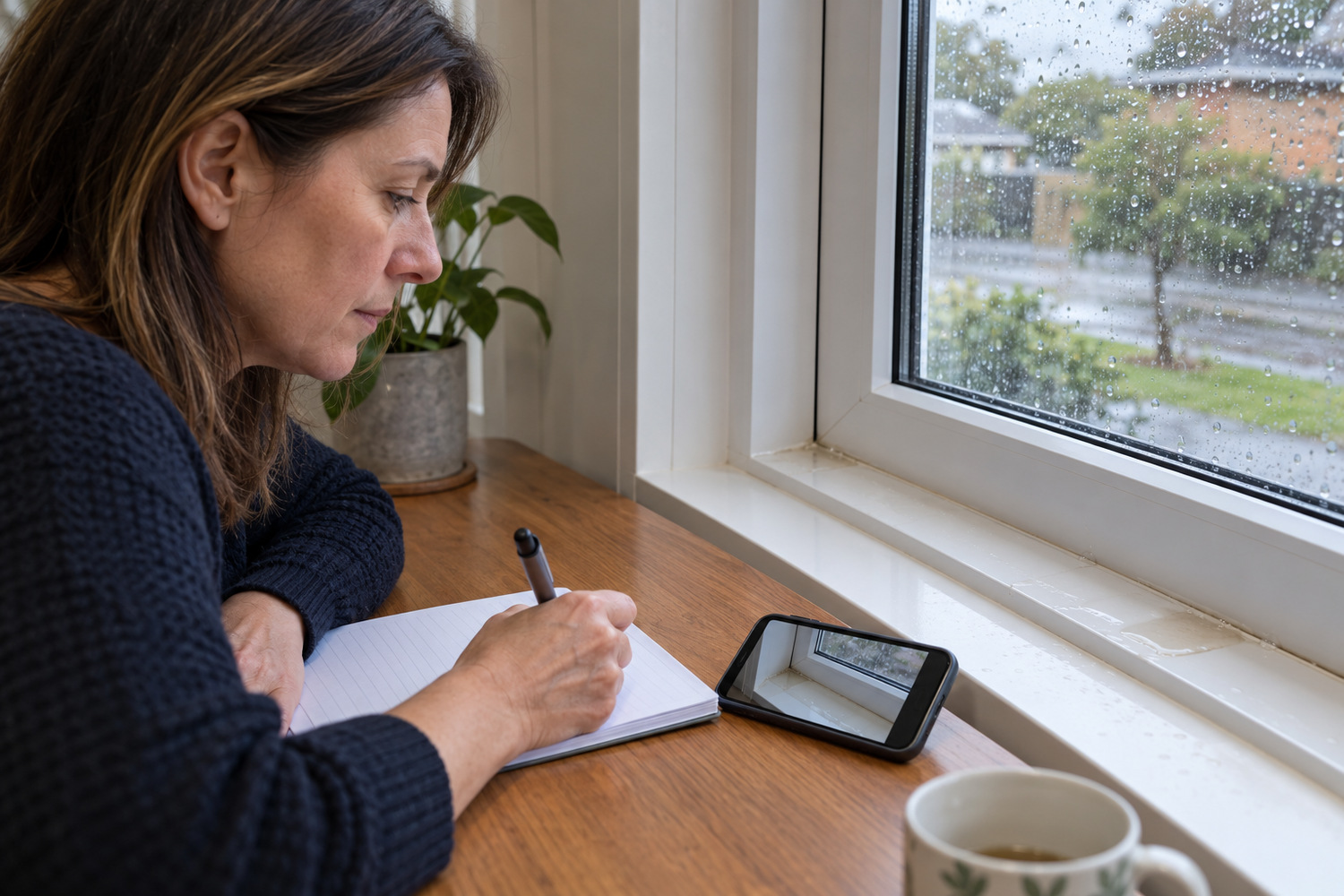
Report unsafe movement or damage promptly, without continuing to operate a window that feels unsafe.
Ask for somebody to look at visible damage to a frame or a pane. A sash that drops on its own, a lock that will not engage, standing water after rain or a lifting seal belong on the same list.
Moisture on the glass has several causes. What condensation between or on the panes is telling you is covered on its own page.
Stiffness or water alone does not establish the cause, but neither should be dismissed as normal without assessment. Explain what happened and let the installer identify the next step. A visual checklist cannot certify compliance or rule out a defect.
Write the list while it is fresh, then record the affected opening with Weatherall through the contact page, which takes a file upload so the pictures travel with it.
Glazing-identification information is adapted from the ABCB Housing Provisions Standard 2025, Part 8.4, checked on 19 October 2026. The National Construction Code 2025 was provided by the Australian Building Codes Board under the CC BY 4.0 licence.
Do not assume that stiffness is normal because a window is new. Use the supplied instructions, stop rather than forcing it, and record the difficulty for the installer to assess.
A missing sticker alone does not establish which glass was installed. Identification may use permanent etching or a non-reusable label under the rules that apply to the work. Ask the supplier to clarify any glass you cannot identify.
Record the room, opening, date and visible concern, with a photograph where safe. Send it through the agreed installer contact route promptly. If operation feels unsafe, stop using that window while arranging advice.