
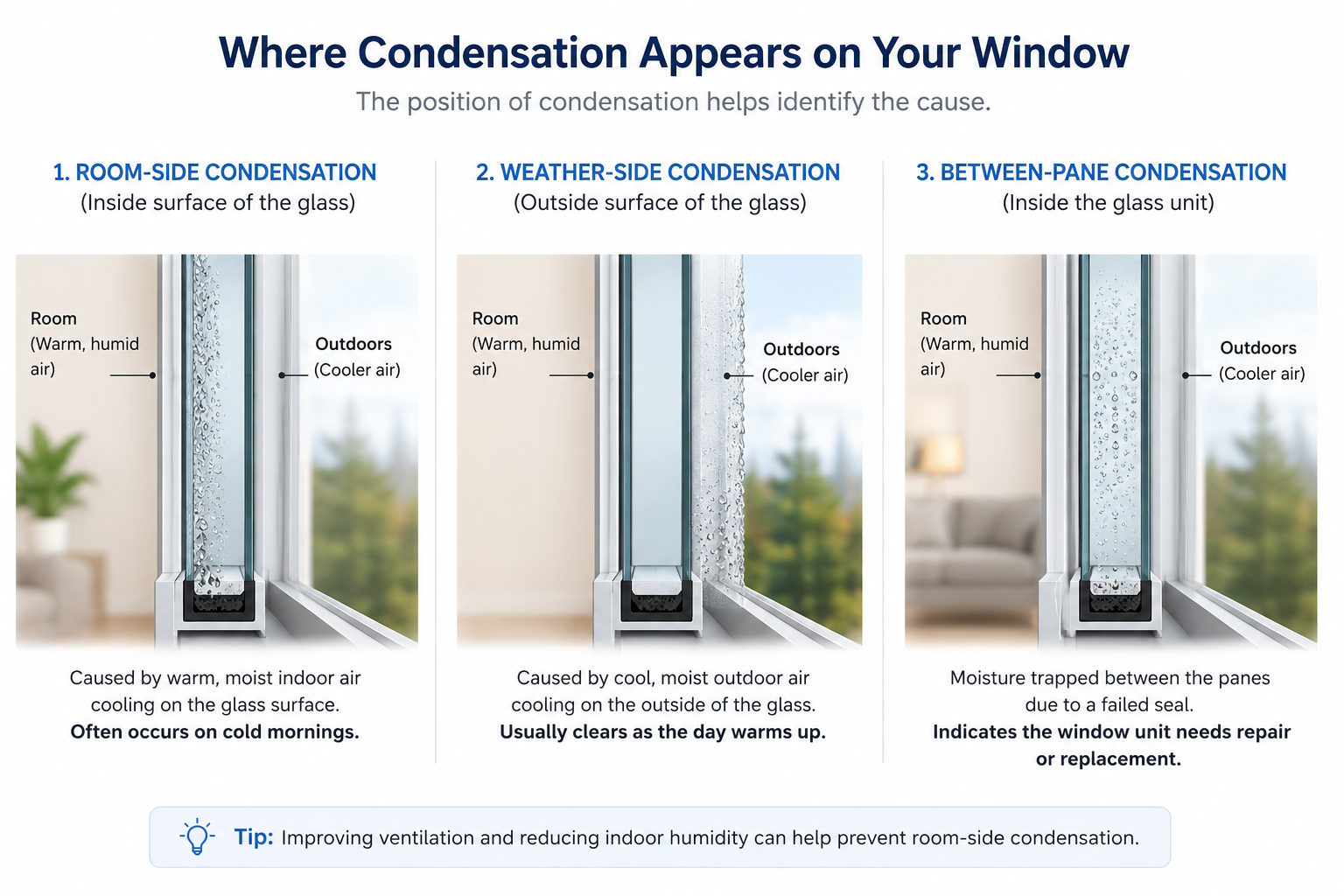
Condensation on double glazed windows usually does not mean the window has failed. The important detail is where the moisture sits: on the room side, on the outside face, or trapped between the two panes.
On a cold Melbourne winter morning, it can be confronting to find water on glass you paid good money to upgrade. At Weatherall Windows in Campbellfield, we manufacture uPVC (unplasticised polyvinyl chloride) double glazed windows and doors for homes across Melbourne and regional Victoria. The answer is usually less dramatic than it first looks.
Condensation is a moisture and temperature issue. Warm air can hold more water vapour than cold air. When moist air meets a surface that is cool enough, the water vapour turns back into liquid water. That temperature point is called the dew point.
Double glazing helps because the inner pane usually stays warmer than it would in a single glazed window. It still cannot remove moisture from the room. A tight, warm home with showers, cooking, drying clothes, indoor plants, pets, and people breathing overnight can still create enough humidity for water to form on glass.
The first check is simple: work out which surface is wet. Moisture that looks similar at first can point to three different causes.
| Where the condensation appears | Common cause | What it usually means | What to do |
|---|---|---|---|
| Inside surface, facing the room | Indoor humidity meeting a cool surface | Usually a ventilation or moisture issue | Use extraction, open windows briefly, reduce indoor moisture, and check heating and airflow |
| Outside surface, facing the weather | Outer glass staying cold because little indoor heat is escaping | Usually a sign the glazing is insulating well | Leave it alone. It should clear as the sun, wind, or outdoor temperature changes |
| Between the two panes | Failed sealed glass unit or saturated desiccant | The insulated glass unit needs attention | Contact the manufacturer or installer with photos and installation details |
A cloth test helps. If you can wipe the moisture from the room side, it is internal surface condensation. If it wipes from the outside, it is external surface condensation. If it will not wipe from either side because it sits inside the sealed gap, the unit needs to be checked.
Interior condensation forms when indoor air carries more moisture than the room can handle at the glass temperature. Bathrooms, kitchens, laundries, bedrooms, and living areas with poor airflow are the usual problem spots.
Common moisture sources include:
Double glazed windows reduce the risk because the inner pane stays warmer. A warmer glass surface is less likely to drop below dew point. That is why the same room may have had heavy water on single glazing and only a light mist on better insulated glazing.
The fix is usually moisture control. Run bathroom and kitchen exhaust fans long enough to move damp air outside. Open windows for a short burst when the room is wet. Avoid drying clothes indoors where possible. Use a dehumidifier in rooms that stay damp through winter.
Exterior condensation can be a normal feature of high performance glass. It forms when the outside pane gets colder than the outdoor air dew point, usually overnight or early in the morning.
This can feel backwards. Many people expect a better window to stay clear on both sides. The outside pane can stay cold because the double glazed unit is doing its job: less heat from inside the house is reaching the weather side of the glass.
The Australian Glass and Window Association (AGWA) explains that Low-E glass is low-emittance glass. Low-E coatings reduce long-wave heat transfer. In practical terms, that can help keep heat inside, while the outer pane remains closer to the outdoor temperature.
Exterior condensation is more likely on still, cold, humid mornings. It may appear on some windows and not others because shelter, wind, orientation, trees, nearby walls, and rooflines all change the local conditions around each pane.
In most cases, outdoor condensation needs no fix. It usually clears as the day warms, the sun hits the glass, or air movement increases.
Condensation between the panes is the warning sign. A double glazed unit has two panes separated by a sealed air or gas space. That space is meant to stay dry.
AGWA describes a double glazed unit as two panes separated by an air or gas space, with dried air in the sealed space. It also defines desiccant as the drying agent inside hollow spacer frames used to absorb moisture within insulated glass units.
When moisture appears inside that sealed gap, the edge seal has usually been breached or the drying material has reached the end of its useful life. The result is fogging, misting, or water marks that cannot be wiped from either side of the glass.
This is the type of condensation worth acting on. Opening a window, running a fan, or cleaning the glass will not solve it. The sealed unit needs to be assessed. In many cases, the glass unit is replaced instead of the whole frame.
Because Weatherall manufactures its own sealed double glazed units, the unit, seal, and warranty pathway can be checked through the same business that supplied the windows.
uPVC frames can reduce frame-edge condensation because uPVC transfers heat and cold less readily than standard aluminium. The frame stays closer to the room temperature, which lowers the chance of cold bridging around the edge of the glass.
Cold bridging happens when a conductive material gives cold a direct path to the inside surface. Standard aluminium is highly conductive, so aluminium frames can become cold enough for moisture to form on the frame or around the glass edge.
YourHome, the Australian Government sustainable housing guide, describes uPVC frames as having excellent thermal performance, often better than timber or thermally broken aluminium. It also notes that insulated glazing units and uPVC or timber frames can reduce thermal bridging and condensation risk.
Frame material is still only part of the answer. If the room air is very damp, any window can show interior condensation. Better frames and glazing reduce the risk. Ventilation and humidity control still matter.
Surface condensation is usually normal when the conditions line up. Trapped condensation inside the sealed glass unit needs professional attention.
Use this as a simple decision point:
A pattern also matters. A light mist on the bedroom window on the coldest mornings is different from heavy water running down the glass every day. Persistent interior condensation can damage reveals, paint, plaster, curtains, and nearby timber if it is left unmanaged.
The best way to reduce interior condensation is to lower indoor humidity and keep the room side of the glass warmer. Double glazing helps with the second part. Daily habits handle the first.
Practical steps include:
If condensation is still heavy after those changes, the problem may be broader than the window. It may be ventilation, insulation, heating pattern, or moisture entering the home from another source.
Condensation on double glazing can be normal when it forms on the room side or outside surface. Room-side condensation points to indoor humidity. Outside condensation can happen when the outer pane stays cold because the glass is insulating well. Condensation trapped between panes is the one that needs assessment.
Condensation only suggests double glazing failure when it is trapped between the panes. Moisture on the room side or weather side is surface condensation. It can usually be wiped away from one side of the glass.
Outside condensation happens when the outer pane drops below the outdoor dew point. High performance glazing can make this more visible because less heat escapes through the glass to warm the outside pane.
uPVC frames can reduce condensation around the frame edge because they transfer less heat and cold than standard aluminium. They work best as part of a whole window system that includes good seals, suitable glass, and sensible ventilation.
Surface condensation alone is usually not a reason to replace windows. Replacement becomes relevant when old single glazing, poor seals, or cold conductive frames are making the home uncomfortable, or when condensation is trapped inside a sealed double glazed unit.
The useful check is the wipe test. Wipe the room side, then the outside face if you can reach it safely. If the mark disappears from one side, you are dealing with surface condensation.
If the fogging, mist, or water marks sit inside the sealed gap and cannot be wiped from either side, take clear photos from different angles. Note when the windows were installed and which rooms are affected. For Weatherall windows, call 1300 132 095 or contact the Campbellfield showroom with the photos so the sealed unit can be checked against the job details and warranty pathway.
