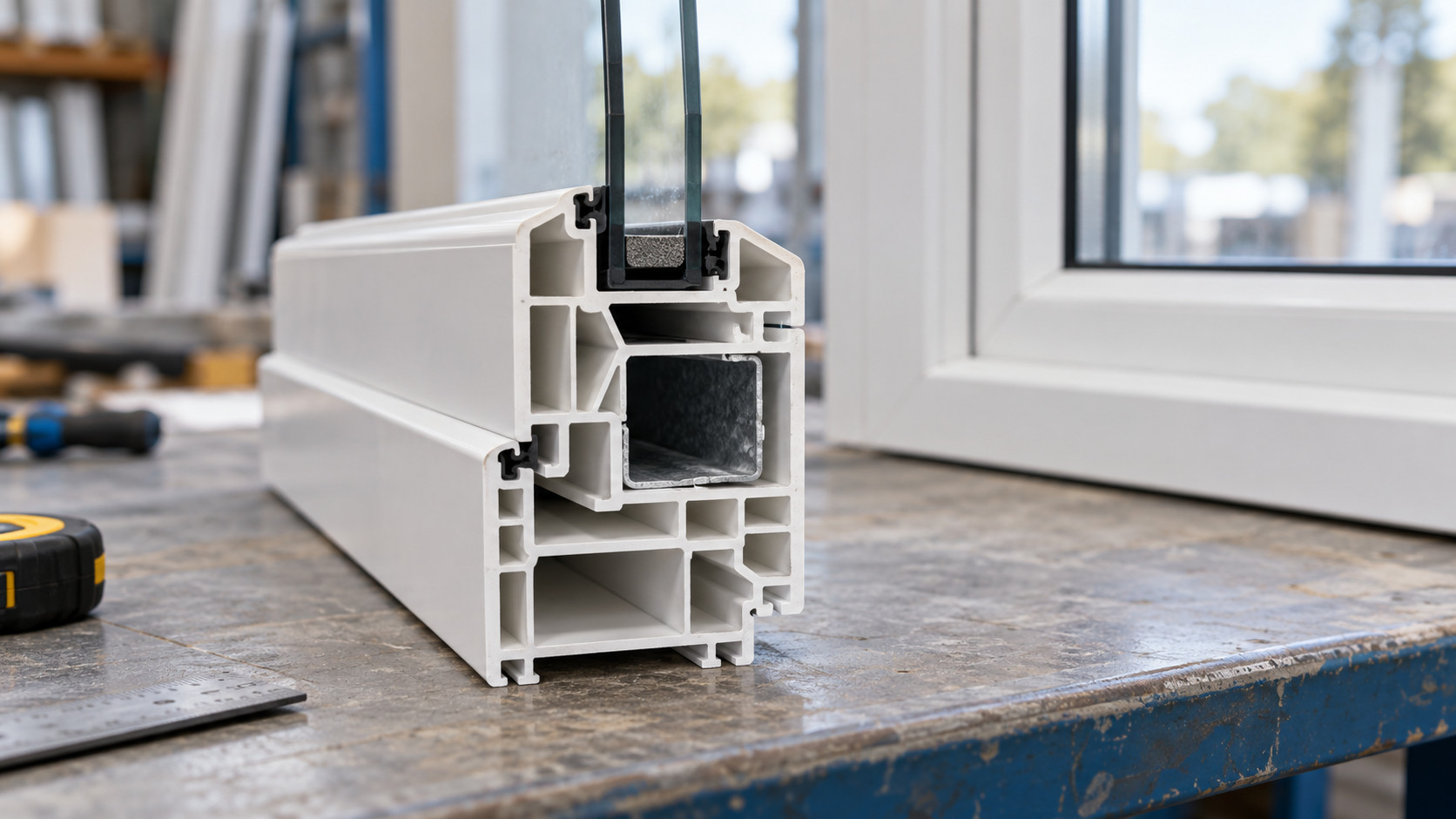
uPVC window frames are hollow plastic sections divided into sealed chambers. Most carry a galvanised steel insert inside one of those chambers. The corners are usually melted together rather than screwed. Those three things, the chambers, the steel and the corners, are where two uPVC quotes differ from each other.
If you are holding two quotes for the same windows, this is the part nobody explains. The photographs look the same. One quote is dearer. Nothing on either page says what the extra money buys. Two frames that look identical on a quote can be three chambers apart inside.
A uPVC window frame is a shaped hollow length of rigid plastic. uPVC stands for unplasticised polyvinyl chloride, the rigid plastic used for window and door frames.
Two words turn up on a specification sheet and neither gets explained. A profile is the shaped length the frame is cut from. Extrusion is how that length is made. Molten uPVC is pushed through a shaped die, then cooled until it holds its shape.
The frame is not a solid block of plastic. Cut across one and you see a grid of hollows. Each sealed hollow is a chamber, and it runs the full length of the profile.
A chamber does two jobs. It holds a pocket of still air, and still air carries heat poorly. It also makes heat take a longer path across the frame. That is why a chambered profile slows heat moving through the frame.
The number of chambers is not fixed. Published Australian system specifications describe hinged window systems with five chambers, and a lift and slide door system with four. The sash has its own chambers as well. The sash is the part of the window that opens, and its count can differ from the frame’s.
A finished window is that frame, a sealed glass unit and the hardware that pulls the sash shut. The frame is the part a quote usually says least about.
Because plastic alone will not hold the shape at window sizes. uPVC is rigid, but it is not structural once a frame gets large. A galvanised steel insert sits inside one of the hollow chambers and takes the load the plastic cannot.
What the steel carries is easy to picture. Wind pushes on the glass, and the frame has to resist bending. A sash hangs on its hinges, and its weight tries to pull the frame out of square.
One Australian window company’s technical page describes galvanised steel inserts placed in the hollow cavities of the frame. They are there for reinforcement and support, so the frame can stand up to outside forces and carry load.
Three things vary between systems, and between window types in the same system. Whether a reinforcement is there at all. How thick it is. Whether it runs the full length of the piece it sits in, or only part of it.
Thickness is published for some systems and not for others. One Australian supplier lists 1.5 millimetre galvanised steel for the system it sells. That is one system’s specification and not a rule. It is worth asking about the windows you are being quoted.
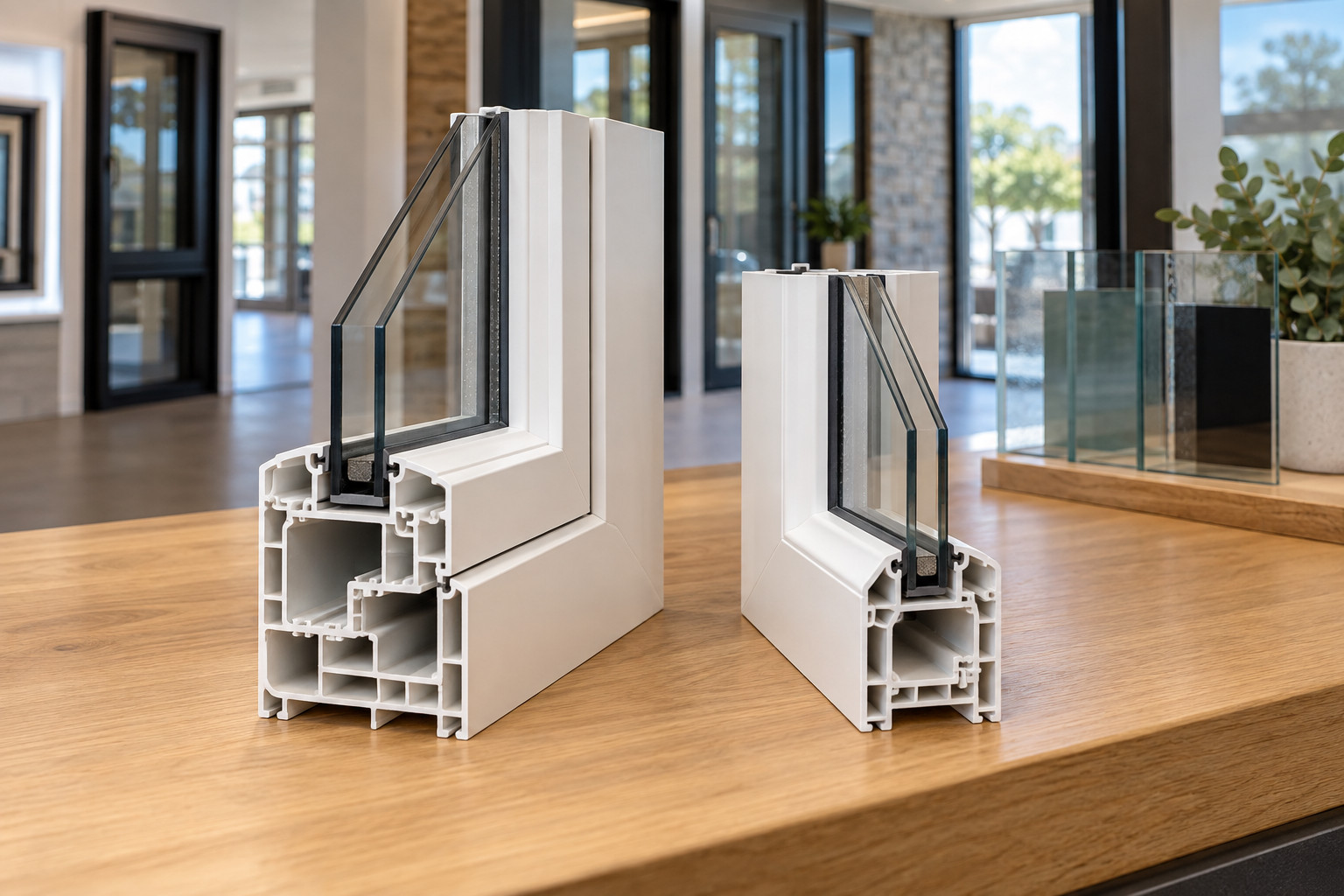
Frame depth is how far the profile measures from the inside face to the outside face. It drives three other things at once.
A deeper frame has room for more chambers. It has room for a thicker sealed glass unit. And it carries more visual weight, which is a real cost if you wanted a slim look. Sightline is the trade word for that: the width of frame you can still see once the window is installed.
Published depths vary widely. uPVC window frames sold here are commonly described at around 60 and 70 millimetres. Systems built on an 80 millimetre frame are sold here as well. Sliding frames run wider again, and one published range lists frames of 70, 92 and 136 millimetres.
The honest answer is that depth is an input, not a score. A deep frame built badly is worse than a shallow frame built well. The number on its own settles nothing.
If what you want is the effect on a heating bill, that is a different question with figures behind it. The post on the one window number that predicts your heating bill answers it.
The corner is where a frame is asked to do the most, so it is worth one question.
Welding is a heat process. The two cut ends of the profile are heated until the material melts. They are pressed together and left to cool as one piece. One Melbourne manufacturer’s process page describes it as heat or fusion welding. What you end up with is a solid joint, with no seam for air or water to find.
The alternative is a mechanical joint. The corner is held by fasteners and relies on a sealant to keep the weather out. Sealant is a consumable. It can perish, and a fastened joint can work loose.
On uPVC, that is the normal method: the frame is welded at the corners rather than screwed together. Ask about it anyway, and ask about the sash corners as well as the frame corners. A quote rarely mentions either.
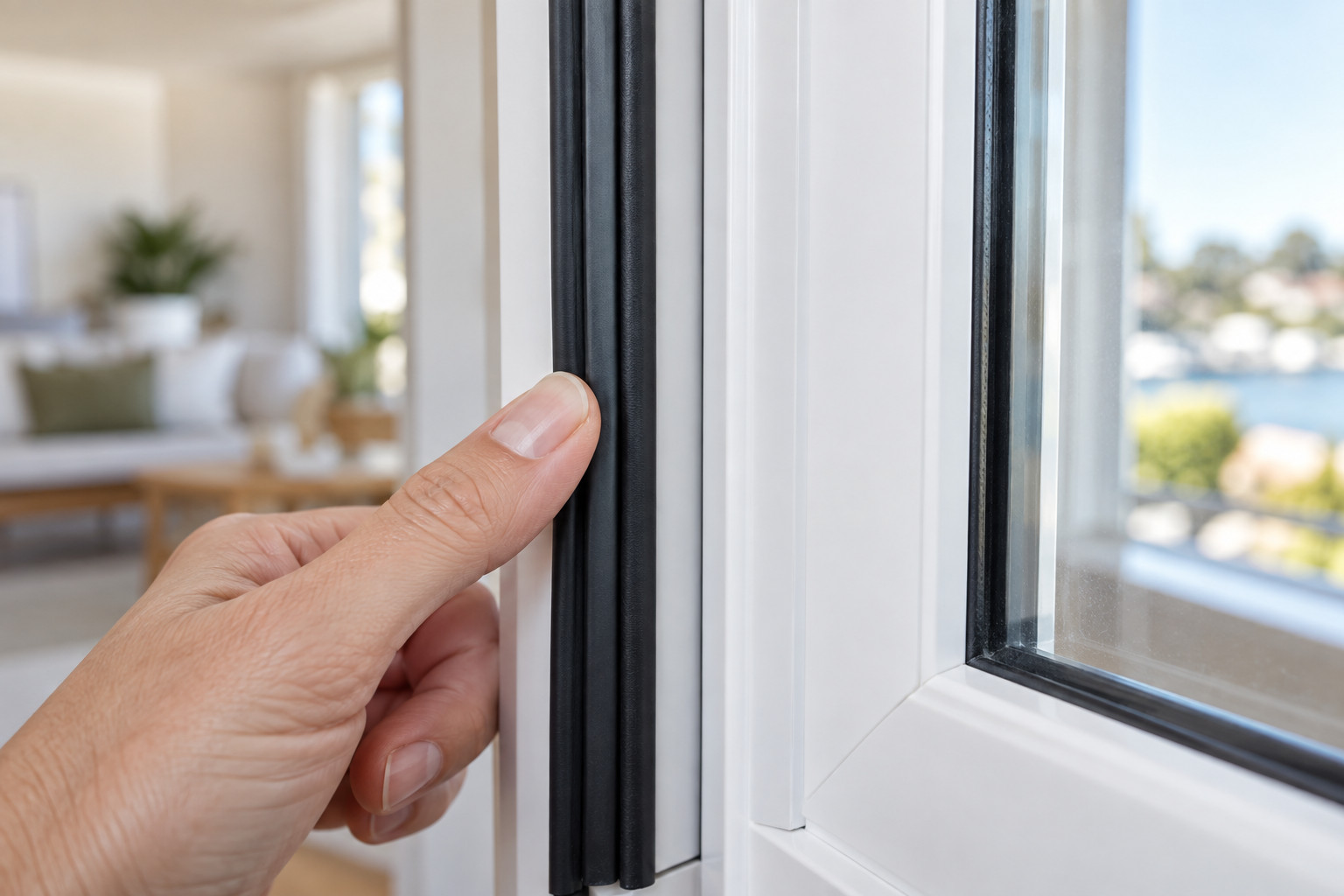
A gasket is the rubber strip the sash presses against when the window shuts. It is the part that stops draughts, and the part you can put a hand on.
Most systems seal at the outer edge of the sash. Some add a second line further in. Some add a third in the middle of the frame. One European system is published in two versions, one with two sealing lines and one with three. The third is a central gasket. The count is a specification choice rather than a fact about uPVC.
More lines are not automatically better. A gasket only works while it is squashed. The hardware has to pull the sash tight against it at every locking point, so two well compressed seals beat three loose ones.
Melbourne gives all of that a workout. A summer cool change can drop the temperature sharply inside an hour, and every material in the wall moves with it. Joints and seal compression are where that movement shows up first.
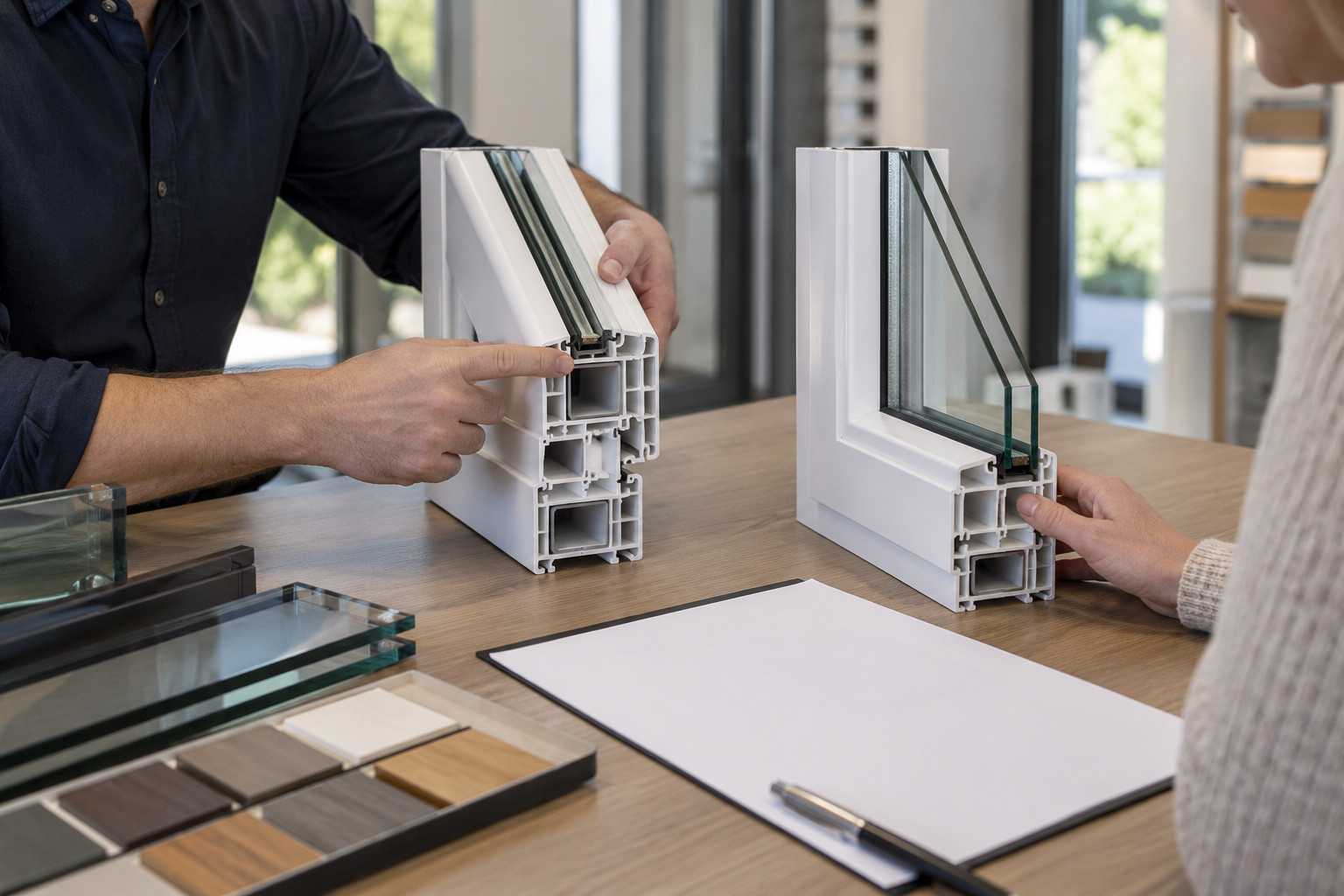
Five questions, and the answers are what the price difference is made of. Put all five to both suppliers.
Ask for the answers in writing, with the quote. A specification that cannot be put in writing is not a specification.
There is a good reason to insist on that. Two published descriptions of the same window system give different chamber counts for it, one saying five and the other seven. Brochure numbers drift. The specification for the windows you are buying should not.
If you want to see the range of window types first, the uPVC double glazed windows page sets each of them out. And if you would rather someone put the frame specification in writing against your own plans, send them to Weatherall Windows through the contact page.
No. The count on its own says nothing about how well the profile is made or how tightly the window closes. It is most useful read beside the depth, the steel and the seals on the same quote.
Not always, and not in every part of every window. Whether a reinforcement is fitted, and which parts of the window it runs in, changes between systems and between window types. Ask about the exact windows on your quote rather than about uPVC in general.
It is the amount of frame left in view once the window is in the opening. A deeper profile normally leaves more frame and less glass on show, so a window that performs well can still look heavier than the one next to it.