
Most older Australian homes were built when a single pane of glass was considered perfectly adequate. And for decades, it was. Construction methods, climate expectations, and energy costs were all different. Nobody was thinking about U-values or argon gas cavities when the windows went in.
But the world those homes were built for has shifted. Energy costs have risen. Summers are hotter. Winters still bite. And a home that once felt comfortable enough now runs a heater at full stretch through June and an air conditioner all afternoon in January, with the windows doing almost nothing to help.
Double glazing changes that dynamic. Not by transforming the house into something it is not, but by addressing the single biggest weak point in most older building envelopes: the glass.
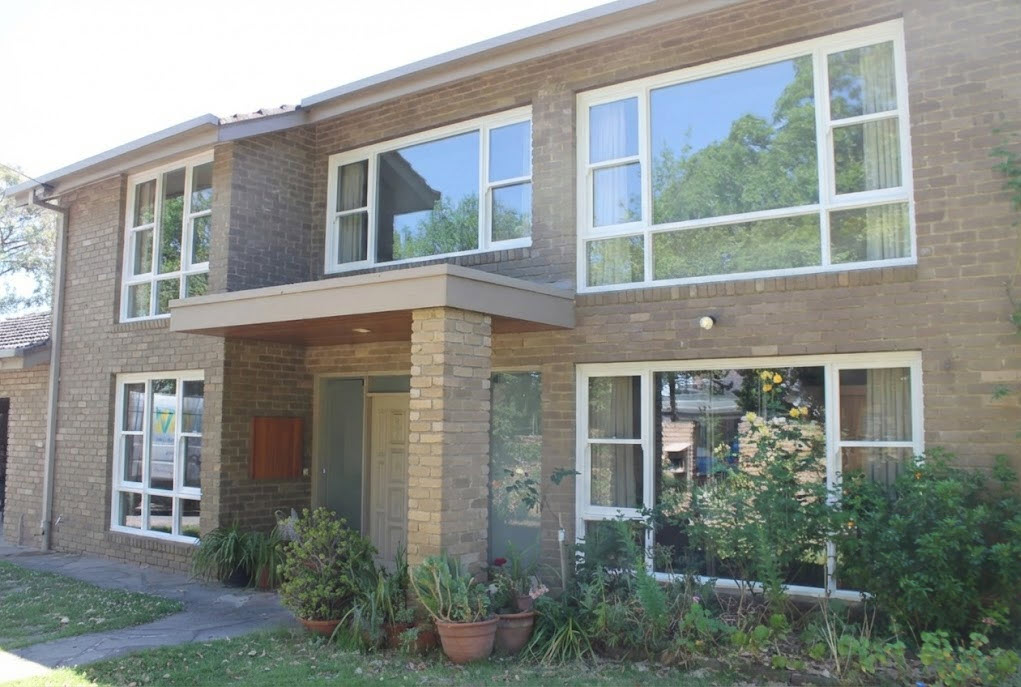
Glass is a poor insulator. A single pane of it, set into a timber or aluminium frame, lets heat pass through with very little resistance.
According to Sustainability Victoria, windows can be responsible for a large share of a home’s total heat loss in winter. In summer, the reverse happens: solar radiation pours through the glass and heats the room faster than the air conditioner can cool it.
The result is a home that works against itself. You pay to heat it, and the warmth escapes through the glass. You pay to cool it, and the sun pushes heat straight back in. In older homes with large window openings or west-facing living areas, this cycle can be relentless.
Single glazing also creates cold spots. Stand next to a single-glazed window on a winter morning and you can feel the chill radiating off the glass. That temperature difference makes rooms feel colder than the thermostat suggests, which usually means turning the heating up further.
Sustainability Victoria notes that double glazed windows can reduce heat loss or heat gain by close to 30% compared with single glazed aluminium windows. When paired with Low-E (low emissivity) glass and high-performance frames like uPVC, the improvement can be considerably greater.
For older homes, this is meaningful. You are not adding insulation to the walls or ripping up floors. You are upgrading the one part of the building envelope that was always the weakest link.
Replacing single-glazed windows with double glazing will not halve your power bill overnight. Anyone who promises that is overstating it.
What it does do is reduce how hard your heating and cooling systems have to work. In a well-insulated older home with double glazed windows, you may find the heater runs less in winter and the air conditioner cycles off sooner in summer. Over a year, those smaller loads add up.
The precise savings depend on too many variables to give a single number: how many windows you replace, the orientation of the house, the condition of the rest of the building envelope, your local climate, and how you use heating and cooling. But the principle holds. Less heat escaping means less energy spent replacing it.
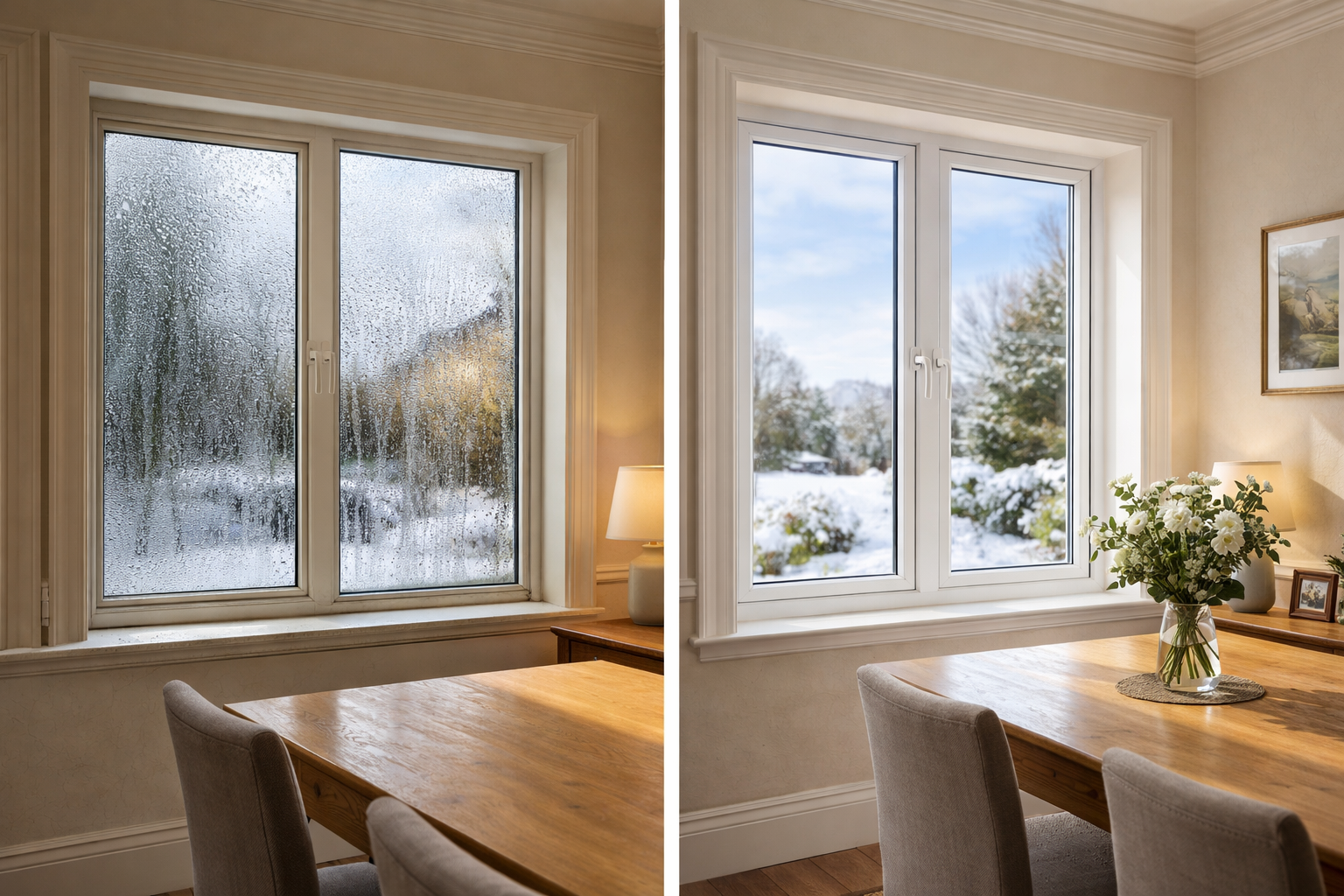
Most people upgrade their windows for thermal comfort or energy savings. But two side effects often get mentioned after the work is done.
Upgrading windows in an older home is not quite the same as specifying glazing for a new build. There are a few practical considerations worth thinking through before you commit.
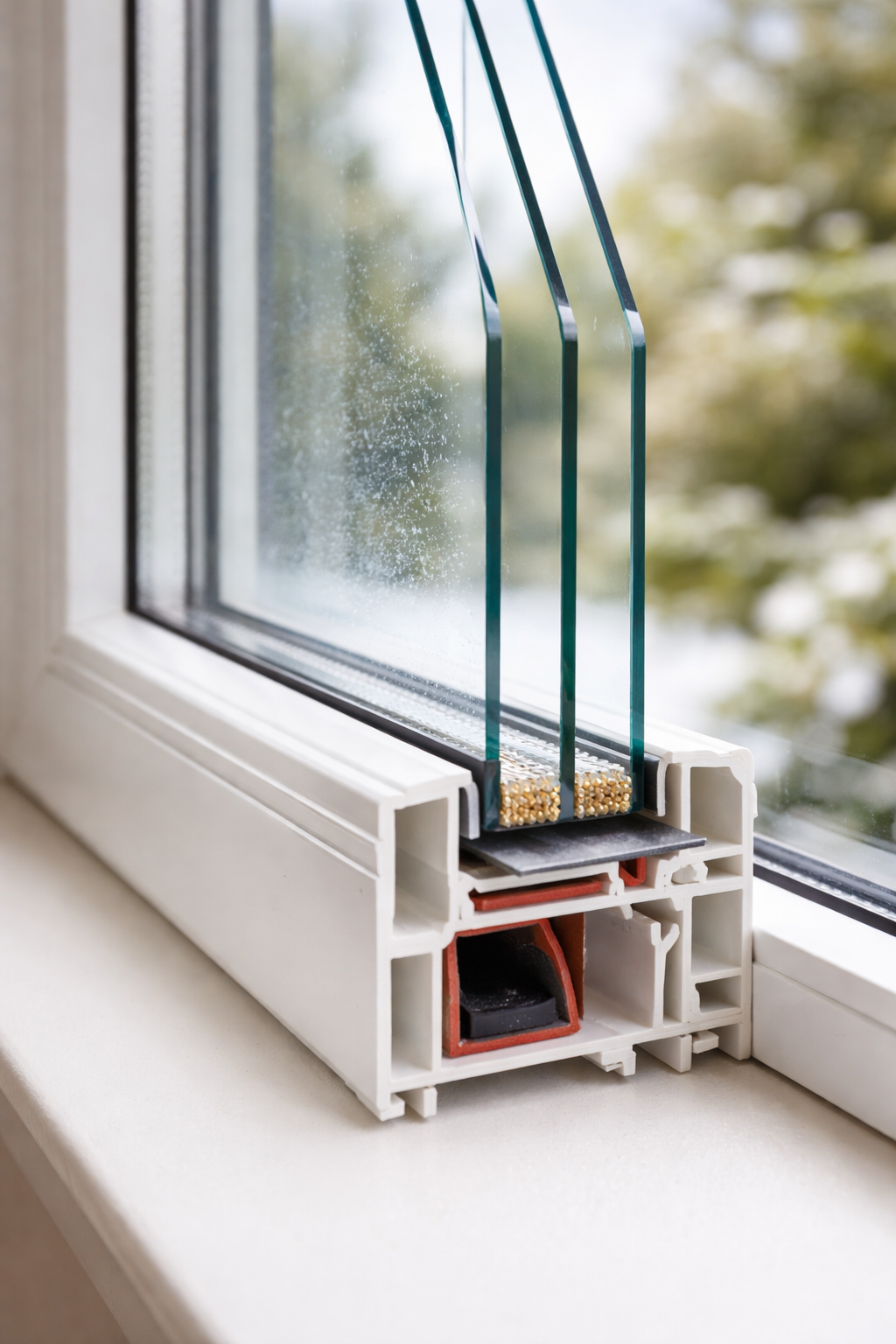
It is easy to focus on the glass and overlook the frame. But a double glazed unit is a system: glass, gas cavity, seals, spacers, and frame all working together.
uPVC frames are a strong match for double glazing because the material itself is a poor conductor of heat. That means the frame is not undermining the insulation the glass provides. uPVC is also resistant to moisture, UV degradation, and does not require the maintenance that timber frames demand.
Aluminium frames without a thermal break are efficient at one thing you do not want in a window frame: conducting heat. Even with good glass, a thermally unbroken aluminium frame creates a cold bridge that reduces the system’s overall performance.
When upgrading from single glazing to double glazing in an older home, treating the frame and the glass as a single decision tends to give a better result than treating them separately.
A full window replacement across an entire house is a significant investment. The good news is that it does not have to happen all at once.
A practical approach is to start with the rooms where you feel the discomfort most. That is usually bedrooms (cold in winter, hot in summer), living areas with large or west-facing windows, and any rooms where street noise is a problem.
From there, you can extend the upgrade over time as budget allows. Each room you convert adds to the overall comfort and efficiency of the home.
No. It reduces heat transfer through the glass significantly, but some heat will always move through windows, frames, and the rest of the building envelope. The goal is to slow the transfer, not stop it entirely.
Yes. Many homeowners start with the rooms that cause the most discomfort and extend the upgrade over time. You do not need to do the whole house at once to see a difference.
It reduces condensation by keeping the inner pane warmer, but it does not eliminate it entirely. If your home has high humidity or poor ventilation, some condensation may still occur.
No. Ventilation depends on window design and how you use it. Double glazed windows open and close the same way as single glazed ones. The difference is that they seal better when closed, which reduces uncontrolled air leakage.
In most cases, yes. The installation details will vary depending on the frame condition, window sizes, and access, but double glazing can be retrofitted into the vast majority of older homes.
Yes. The sealed air gap dampens sound transmission. The degree of noise reduction depends on the glass configuration, the type of noise, and external conditions, but most people notice a clear difference.
