
Most people first see bifold doors in a display home or a renovation magazine, fully opened, the living room spilling out onto a wide deck. It looks impressive. But the more useful question is how they work on an ordinary weekday when the kids need to get outside and the dog wants back in.
Bifold doors are a set of hinged panels that fold and stack against one side of the opening. Fully open, they remove most of the wall between inside and outside. Closed, they act as a full-height external door. That flexibility is the main draw, but it comes with design decisions that suit some homes and households better than others.
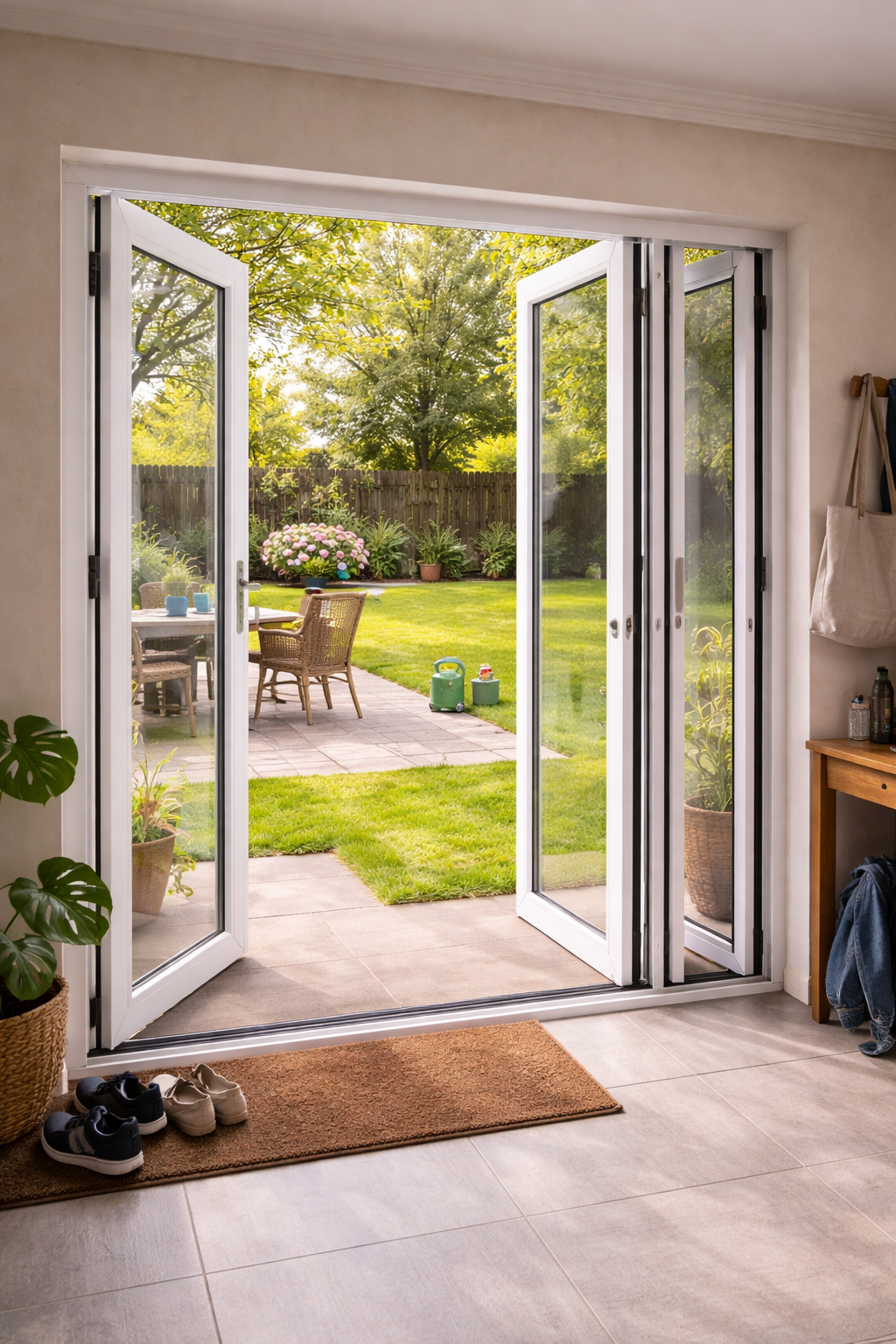
A bifold system is not one door. It is a set of panels (usually between three and seven) connected by hinges and running along a head track and a floor track.
Opening the full set means unlatching, folding, and sliding the panels to one side. It takes a few moments and a bit of clearance. Closing is the reverse.
For everyday use, most bifold systems include what is called a traffic door. This is a single panel, usually at one end, that swings open on its own like a standard hinged door. In practice, this is the door the household uses most of the time. The full bifold opening gets saved for weekends, warm evenings, or when guests are over and the living space genuinely extends outdoors.
This distinction matters. If you are imagining yourself throwing open the entire wall each morning, the reality is likely different. The traffic door is what makes a bifold system liveable day to day.
Bifold doors work well where a wide opening has a genuine purpose. The most effective positions include:
In these layouts, opening the full width creates a real connection between spaces. It changes how people move through the room, where they gather, and how the area feels.
In narrower rooms or spaces with limited outdoor access, the benefit drops off. A sliding door, stacker door, or French door pair may do the same job with fewer moving parts and less fuss.
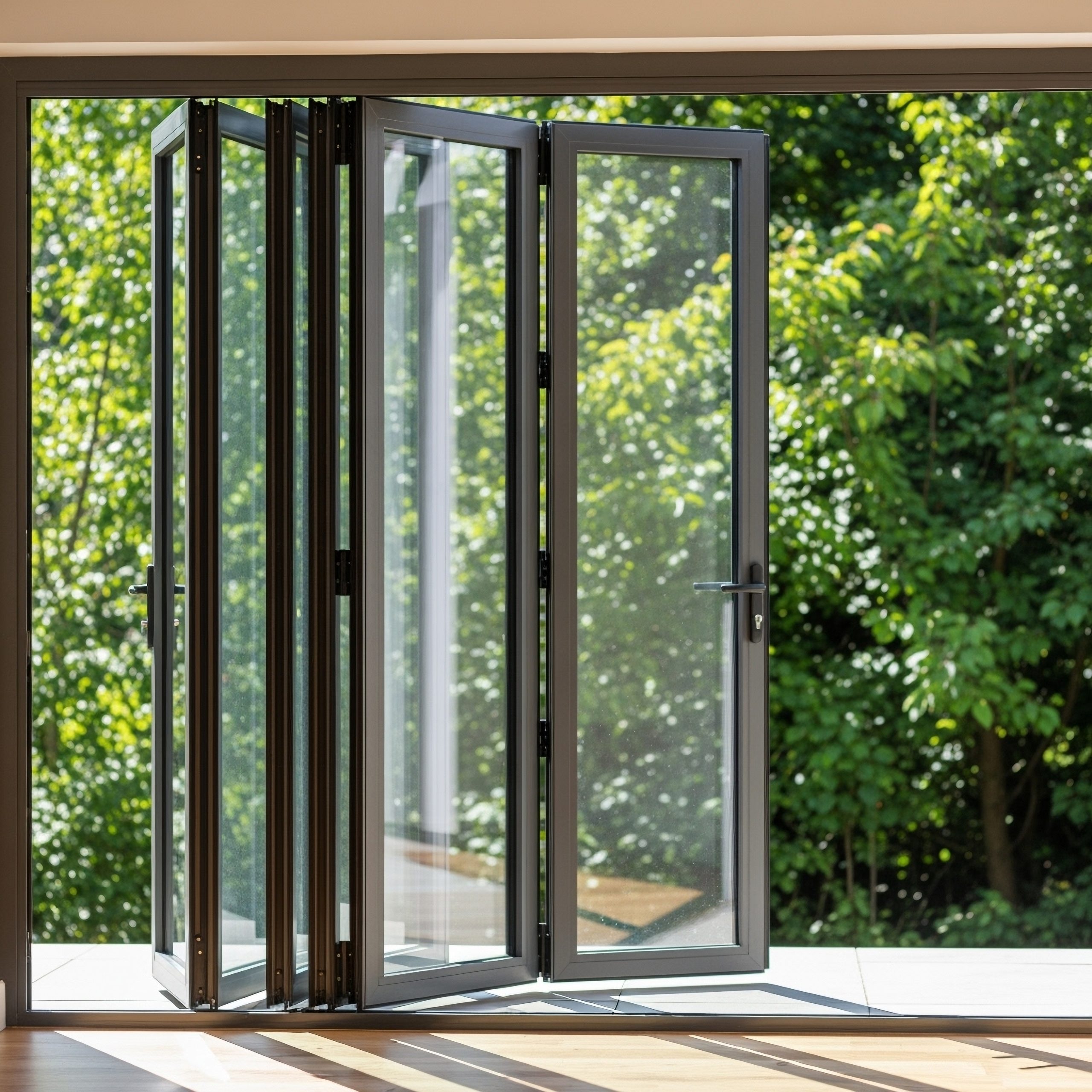
Bifold doors are flexible, but they are not the simplest door system to live with. A few practical points are worth thinking through before you commit.
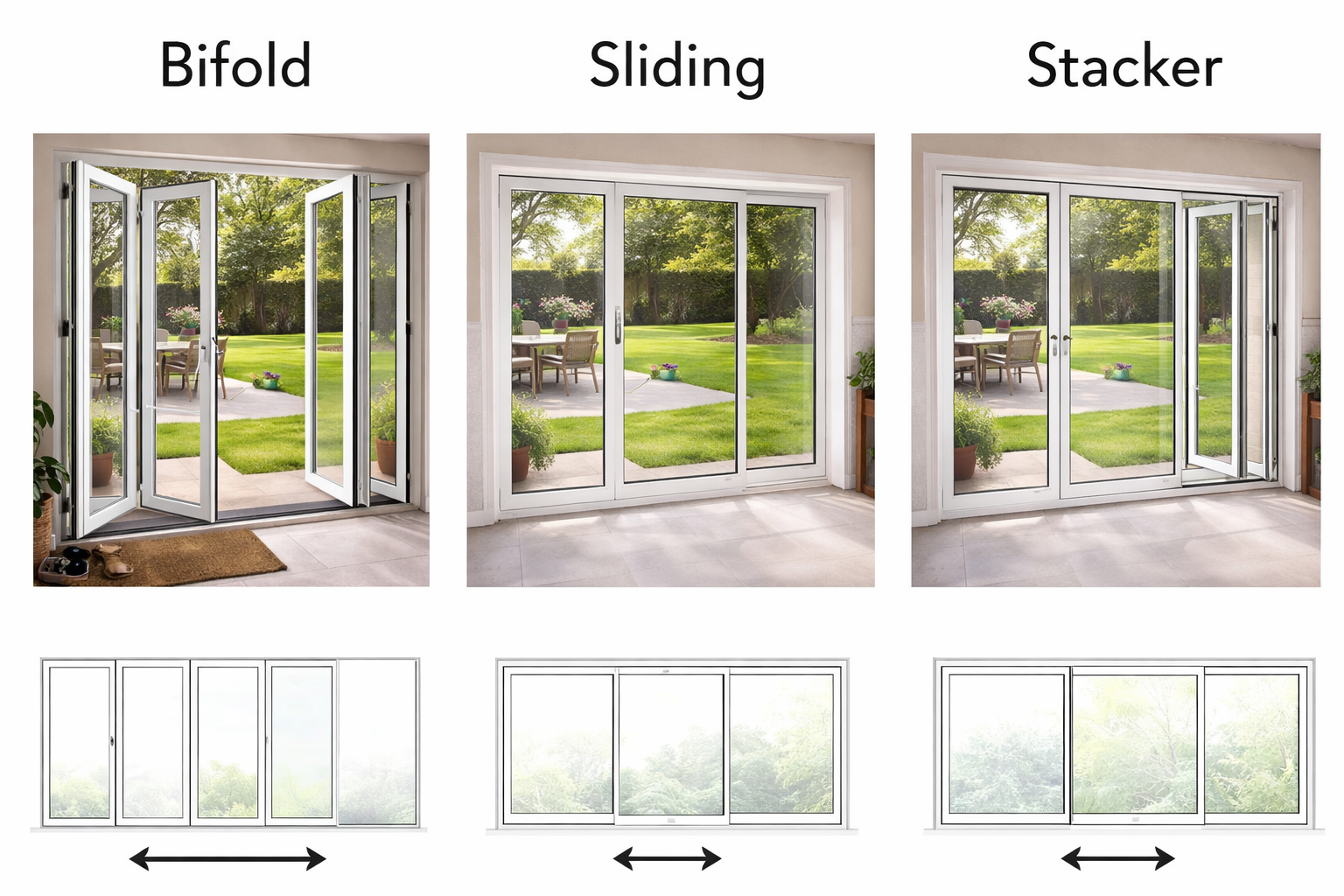
| Bifold | Sliding | Stacker | |
|---|---|---|---|
| Opening width | Full width of the frame | Around half the frame width | Wider than standard sliding |
| How it opens | Panels fold and stack to one side | One or two panels slide horizontally | Multiple panels slide and stack behind each other |
| Everyday access | Via traffic door panel | Slide one panel | Slide one panel |
| Space when open | Stacked panels need clearance at one side | Panels sit within the frame | Panels sit within or behind the frame |
| Mechanical complexity | Higher (more hinges, rollers, seal points) | Lower | Moderate |
| Best for | Wide openings for entertaining and indoor-outdoor flow | Everyday access with a clean sightline | A middle ground between opening width and simplicity |
Bifold doors give the widest opening but ask more of the household in return. Sliding and stacker systems are simpler to operate daily but do not clear as much of the wall.
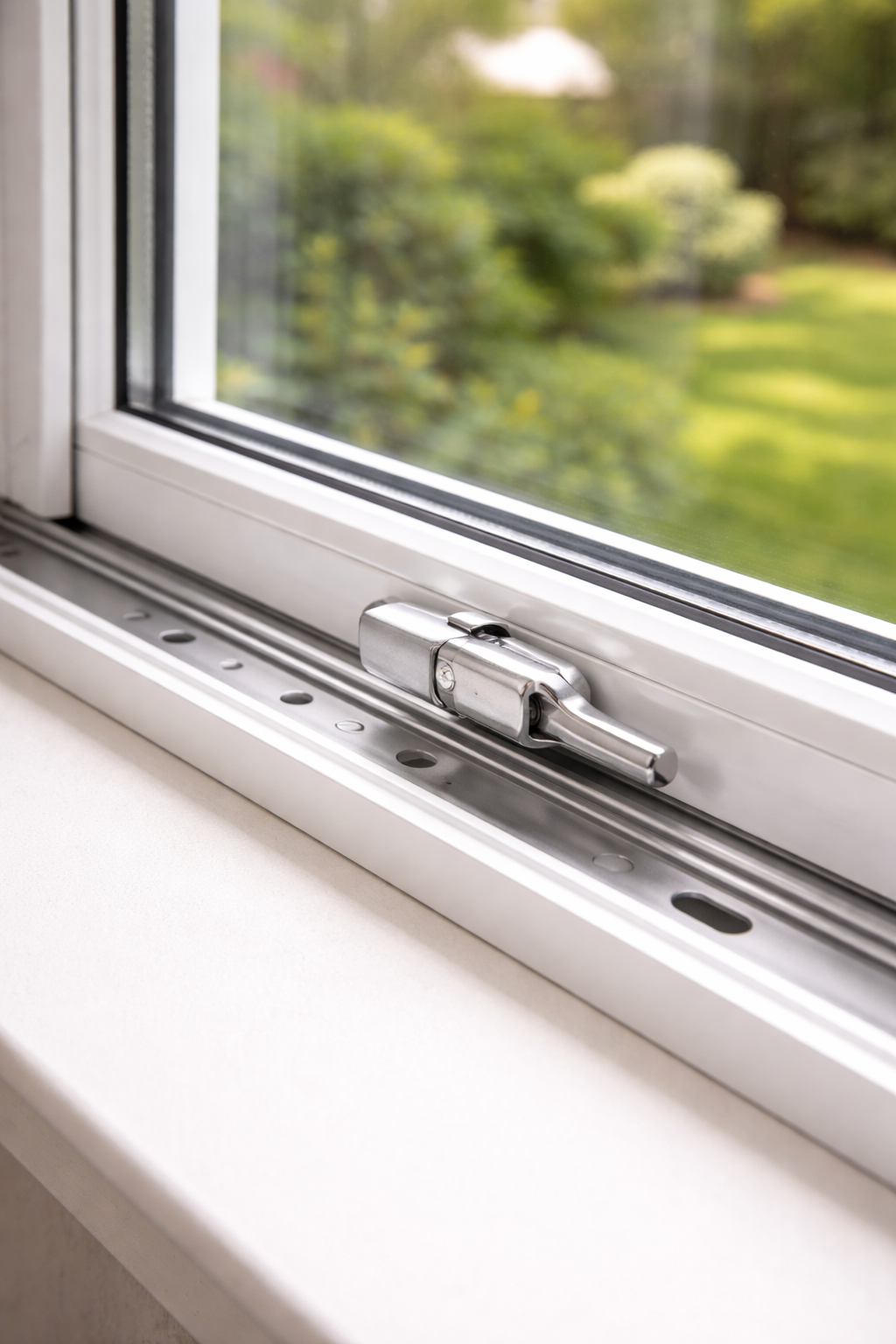
uPVC frames paired with double glazing are a strong combination for Australian conditions. uPVC does not rot, warp, rust, or need repainting, which makes it a practical alternative to timber or aluminium in areas with variable weather. Double glazed units (two panes of glass separated by an insulating air or gas gap) cut heat transfer and outside noise compared to single glazed alternatives.
For bifold doors specifically, this matters because the system has a larger total glass area and more frame joints than a standard door. Better insulation across that entire surface keeps the room more comfortable when the doors are closed, particularly in winter or on hot summer days when heating or cooling is running. It also reduces condensation on the glass in cold weather, a common issue with older aluminium-framed bifold systems.
In Victoria, where mornings can be cold and afternoons warm in the same day, good glazing and frame insulation help the doors perform well across the full range of conditions, not just when they are wide open on a calm afternoon.
Before settling on bifold doors, it helps to be honest about how the space will be used across the year.
If it is most weekends through spring and summer, the wide opening earns its place. If it is once or twice a year, a simpler system may be a better fit.
A bifold opening works best when the deck, patio, or courtyard on the other side is genuinely usable, not just a narrow strip or an area exposed to heavy weather.
In Melbourne and warmer parts of Victoria, bifold doors get regular use through the warmer months. In cooler or more exposed areas, good glazing and frame insulation become essential because the doors will spend more of the year closed.
Think about furniture layout, the stacking zone, the traffic door swing, and sightlines with the doors closed. That is how the space will look for most of the year.
Bifold doors work best when the household uses the opening regularly and the home is designed to support it. A solid deck, a sheltered aspect, and a living area that flows towards the outside all help.
They are less about one dramatic open-wall moment and more about how indoor and outdoor areas work together across a season. When that connection suits the way a household lives, bifold doors are hard to match. When it does not, a simpler door system will often serve the home better for less effort.
If you are weighing up options, it is worth talking through the opening size, the frame material, and the glazing before locking in a system. The right combination makes a noticeable difference to how the doors feel and perform over years of daily use.
