
You’ve just bought a block in the Macedon Ranges, or you’re rebuilding in the Yarra Valley, or your council has written to say your Daylesford property has been re-mapped under the updated Bushfire Management Overlay. Whichever situation you’re in, the same question lands on your desk: what does this mean for the windows?
The short answer: most bushfire-prone properties in Victoria need BAL-rated windows tested to at least BAL-12.5. Some need BAL-29 or BAL-40, depending on vegetation, slope, and the assessed risk. This article walks through what BAL means, what AS 3959:2018 requires of windows at each level, where uPVC fits, and how to confirm what applies to your property before you spec the glazing.
BAL is short for Bushfire Attack Level. It’s a measure of the radiant heat exposure a building is likely to face during a bushfire, expressed in kilowatts per square metre (kW/m²). The figure is calculated under AS 3959:2018, the Australian Standard for construction of buildings in bushfire-prone areas, currently in force with Amendments 1 (June 2019) and 2 (December 2020).
The standard sets six categories: BAL-LOW, BAL-12.5, BAL-19, BAL-29, BAL-40, and BAL-FZ (Flame Zone). Three factors determine which one applies to a property: the type of vegetation around the building, how close that vegetation is, and the slope between the vegetation and the structure. Victoria sits in the highest Fire Danger Index category in AS 3959, which is one reason properties here often rate higher than equivalent sites in other states.
AS 3959 sits alongside the National Construction Code, which requires new Victorian homes to meet a minimum 7 stars under NatHERS plus a Whole-of-Home score of 60 (NCC 2022, effective in Victoria from 1 May 2024). A window specification has to satisfy both at once.
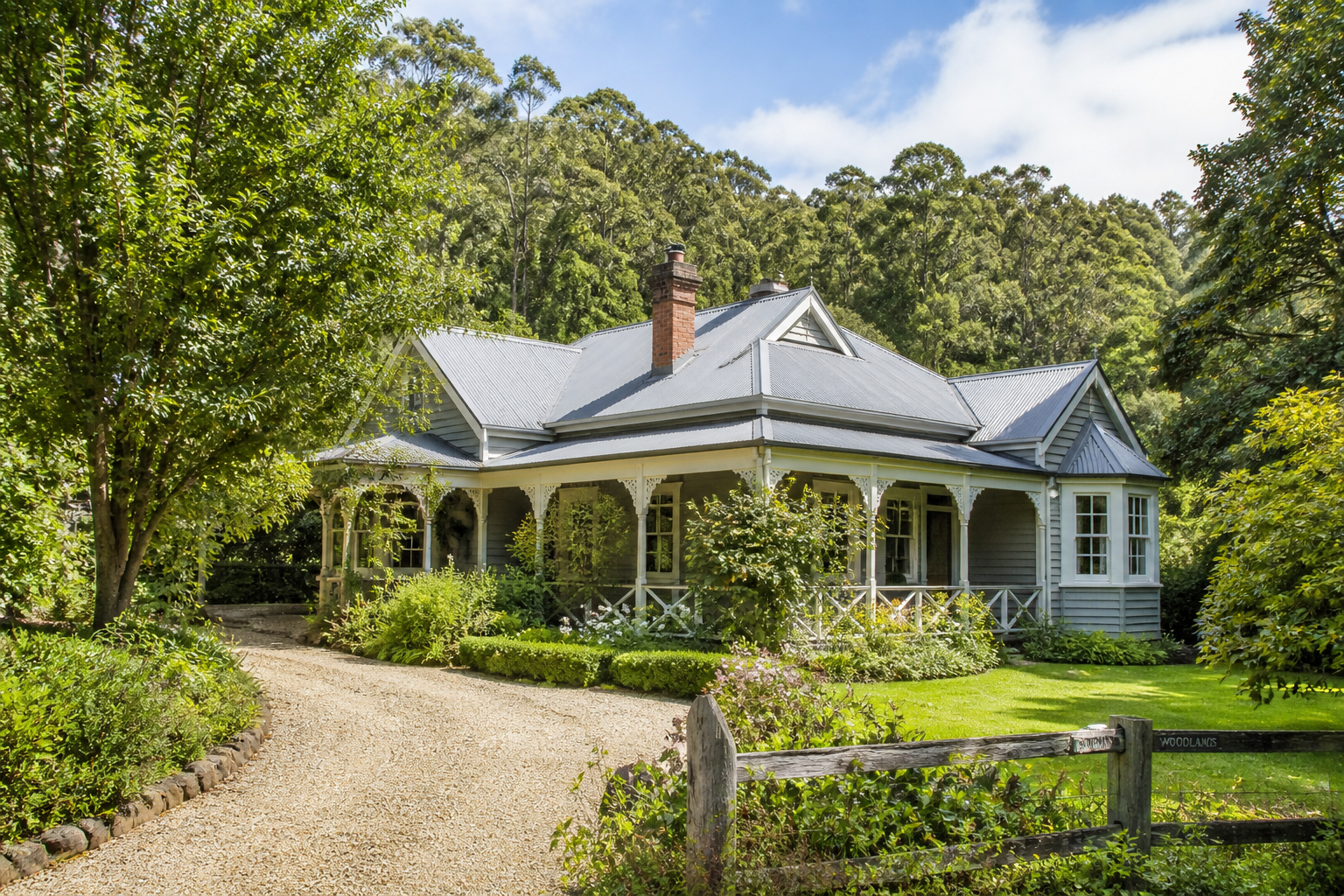
Here’s how the six categories map to radiant heat thresholds and what each level means for the building.
BAL category | Radiant heat | What it means for the building |
|---|---|---|
| BAL-LOW | Insignificant | No specific bushfire construction requirements |
| BAL-12.5 | Up to 12.5 kW/m² | Primarily ember attack |
| BAL-19 | 12.5 to 19 kW/m² | Increased ember and radiant heat |
| BAL-29 | 19 to 29 kW/m² | Significant radiant heat |
| BAL-40 | 29 to 40 kW/m² | Potential flame contact |
| BAL-FZ | Above 40 kW/m² | Direct flame exposure |
The jump from BAL-19 to BAL-29 is where construction requirements really change. At BAL-12.5 and 19, the focus is keeping embers out of the building. From BAL-29 upwards, the building has to resist sustained radiant heat and possible flame contact, which is a different engineering problem.
AS 3959:2018 itself is clear that compliance with the standard improves a building’s chances in a bushfire but does not guarantee survival. Higher-rated construction gives the building, and anyone in it, better odds. It is not a promise.
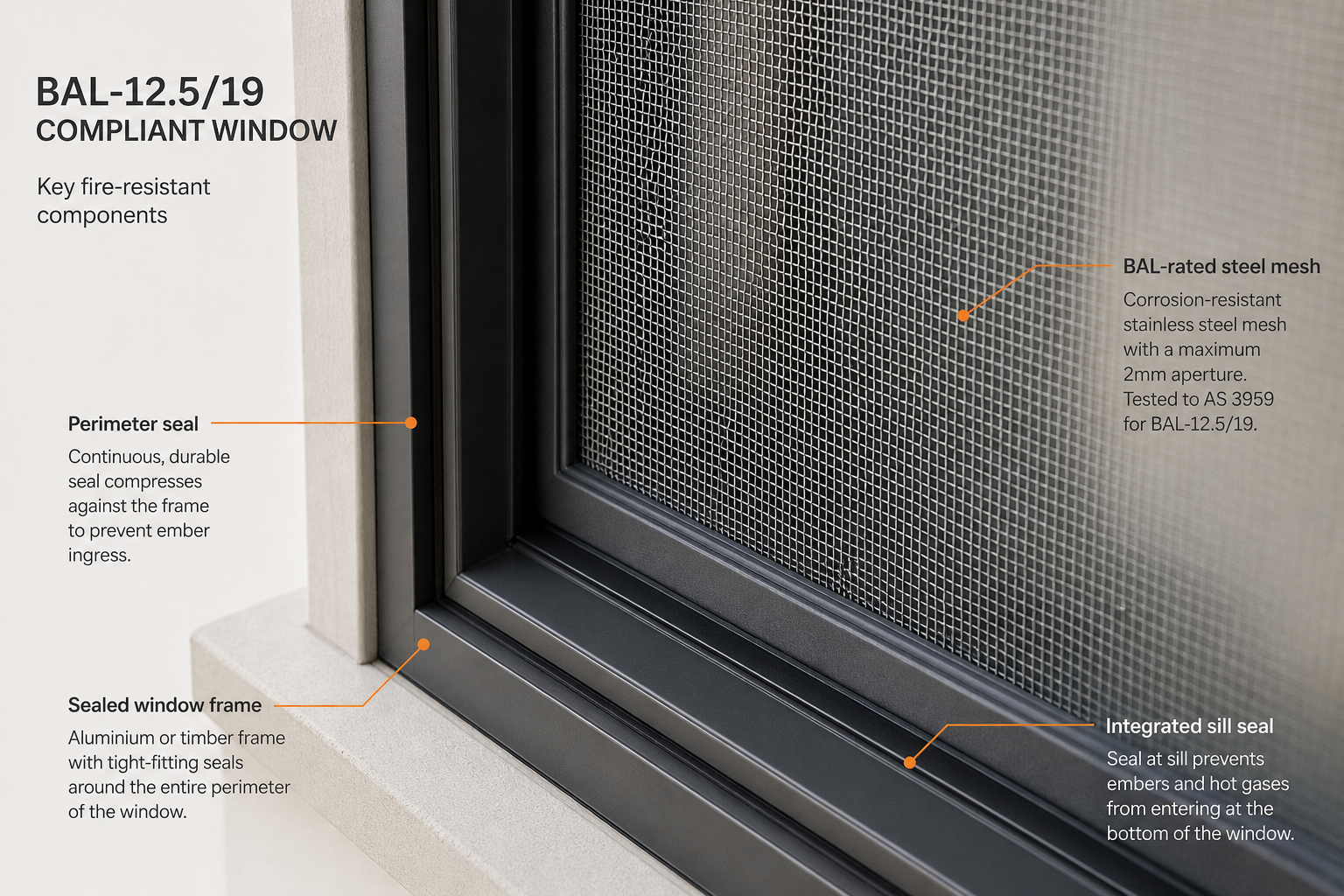
Window requirements step up by category. Two compliance pathways exist at most levels: a deem-to-satisfy specification using listed materials and dimensions, or a system tested to AS 1530.8.1:2018, which covers BAL-12.5 to BAL-40 (AS 1530.8.2 covers BAL-FZ).
The focus is stopping embers and resisting moderate radiant heat. The standard requires:
Requirements step up significantly. The whole window system has to be tested as a unit:
A separate engineering problem. Most residential window systems sold in Australia don’t reach Flame Zone compliance. If a property assesses to BAL-FZ, the design conversation usually moves to fire-rated wall systems with smaller, specifically-engineered openings rather than standard window products.
One thing the table doesn’t show: BAL-rated windows still need to perform on energy efficiency. A bushfire-rated window with a U-value of 4.0 will pass the bushfire requirement and fail the 7-star NatHERS modelling. The window has to do both jobs, which narrows the supplier list quickly.
uPVC frames aren’t inherently bushfire-rated. Nothing is. The standard tests the system as a unit: frame, glass, hardware, and seals together. A frame that performs at BAL-29 in one configuration may not in another, which is why suppliers report ratings on a per-product basis against tested configurations.
There are two ways uPVC can comply. The deem-to-satisfy pathway allows metal-reinforced uPVC frames at BAL-12.5 to BAL-29. Above that, the system has to be tested to AS 1530.8.1:2018. Suppliers who hold that certification list it explicitly with the testing authority and product configuration.
Weatherall’s tilt and turn windows, smart slide doors, and hinged doors can be manufactured to meet BAL 40, the highest level reachable for residential uPVC systems short of full Flame Zone compliance. That covers the great majority of Victorian Bushfire Management Overlay properties outside Flame Zone classification, including most of the Macedon Ranges, Yarra Valley, Dandenong Ranges, and central highlands country where higher BAL ratings are most likely to apply.
A point on testing: because Weatherall manufactures its windows in Campbellfield, the certification covers the system as it leaves the factory. The BAL rating attaches to a specific tested configuration, and the chain between the rating and the unit on site is shorter when the manufacturer holds the certification directly.
If your property has assessed at BAL-FZ, Weatherall’s products won’t be the answer. The design conversation moves to specifically-engineered fire-rated wall construction.
Three steps, in order:
Under Victorian Building Regulations 2018, Items 157 and 158, Class 1, 2, 3, 4, 9a, 9b, or 10a buildings in a designated Bushfire Prone Area must be built to a minimum of BAL-12.5. That covers most homes, granny flats, and small commercial buildings. The minimum is the floor; the assessment determines whether the requirement is higher.
Five questions worth asking before you commit:
If your property is in a bushfire-prone area and you haven’t confirmed what BAL applies, the next step is a 20-minute call to your council’s planning department. If the property is in a BMO, the second step is a BAL assessment from a registered bushfire consultant. Both can happen weeks before the design is finalised, and both make the rest of the project simpler.
Window specification has long lead times at higher BAL ratings. Tested-system products are made to order. Locking the glazing spec early beats retrofitting a higher rating after the frames are out for tender.
Weatherall ships compliant systems across regional Victoria from the Campbellfield factory. If you’ve had a BAL assessment in hand and want to talk through what the rating means for your window selection, the showroom team can answer specification questions before quoting.
