
You have the quote in front of you and the deposit ready. The only thing left to work out is when you get your house back.
A full window replacement in Melbourne usually takes eight to twelve weeks. That is measured from the day you accept the quote to the day the last window goes in. Most of that time is manufacturing. Windows are built to the opening they go into, so nothing is made until someone measures the house properly. The factory then needs four to eight weeks. Installation is the short part. One opening takes a couple of hours, and a whole house is often finished in three to five days. Making good the plaster, render and paint runs after that. It is the stage most people forget to allow for.
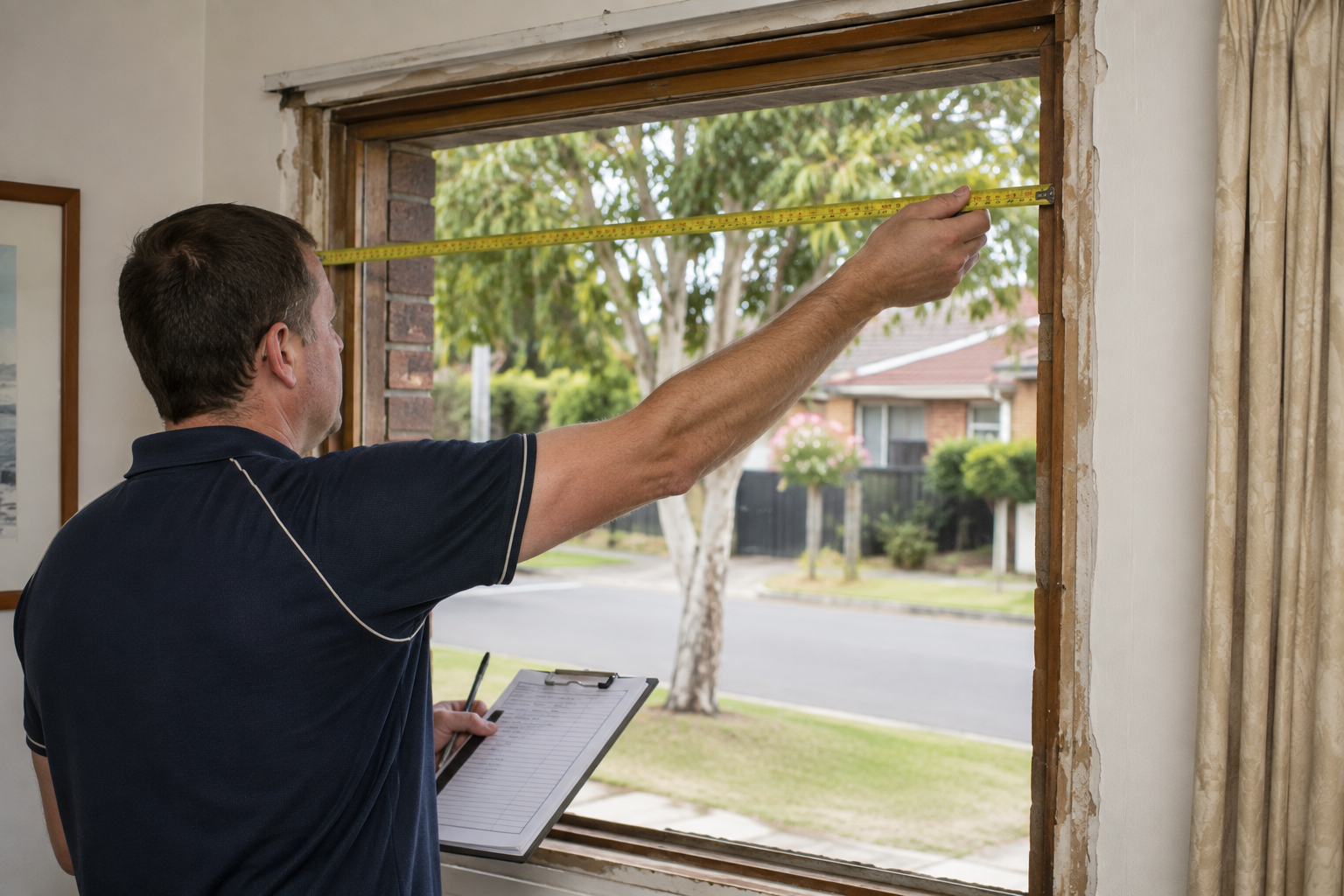
The check measure is a separate visit where someone measures every opening to the millimetre. It happens after you accept the quote. Nothing goes into production before it.
Your quote is priced from plans, a quick tape measure or a photo. That is close enough for a price. Manufacturing needs a tighter tolerance than that. Each window is built to fit a hole with a few millimetres to spare. Get it wrong and the unit will not go in, or it leaves a gap that has to be packed and covered.
Older houses widen that gap. In a 1970s brick veneer home, two openings on the same wall can look identical and differ by ten millimetres. That is why every opening is measured on its own.
Expect the check measure within a week or two of the deposit. [VERIFY WITH CLIENT] Your install date counts from this visit rather than from the day you signed. Anything you have not decided by then is holding up the job.
Settle these before the measurer arrives:
Manufacturing is the longest single block of time in the job. For uPVC double glazed windows made in Melbourne, four to eight weeks from order to ready is the normal range.
The published figures sit inside that band. Windows Republic, which manufactures in Cheltenham, states four to six weeks including custom sizes. Windows For Life quotes six to eight weeks from order. Ask any maker for their current number. Lead times stretch through autumn as demand builds ahead of winter.
Three things push a job to the long end:
Where the frames are made changes what happens when something goes wrong. If a unit comes back a few millimetres out, the fix is a remake. Made locally, that remake is another production slot, so you wait weeks. Imported, it waits for the next shipment, and a sea freight leg is counted in months. Ask at quote stage where the frames are made.
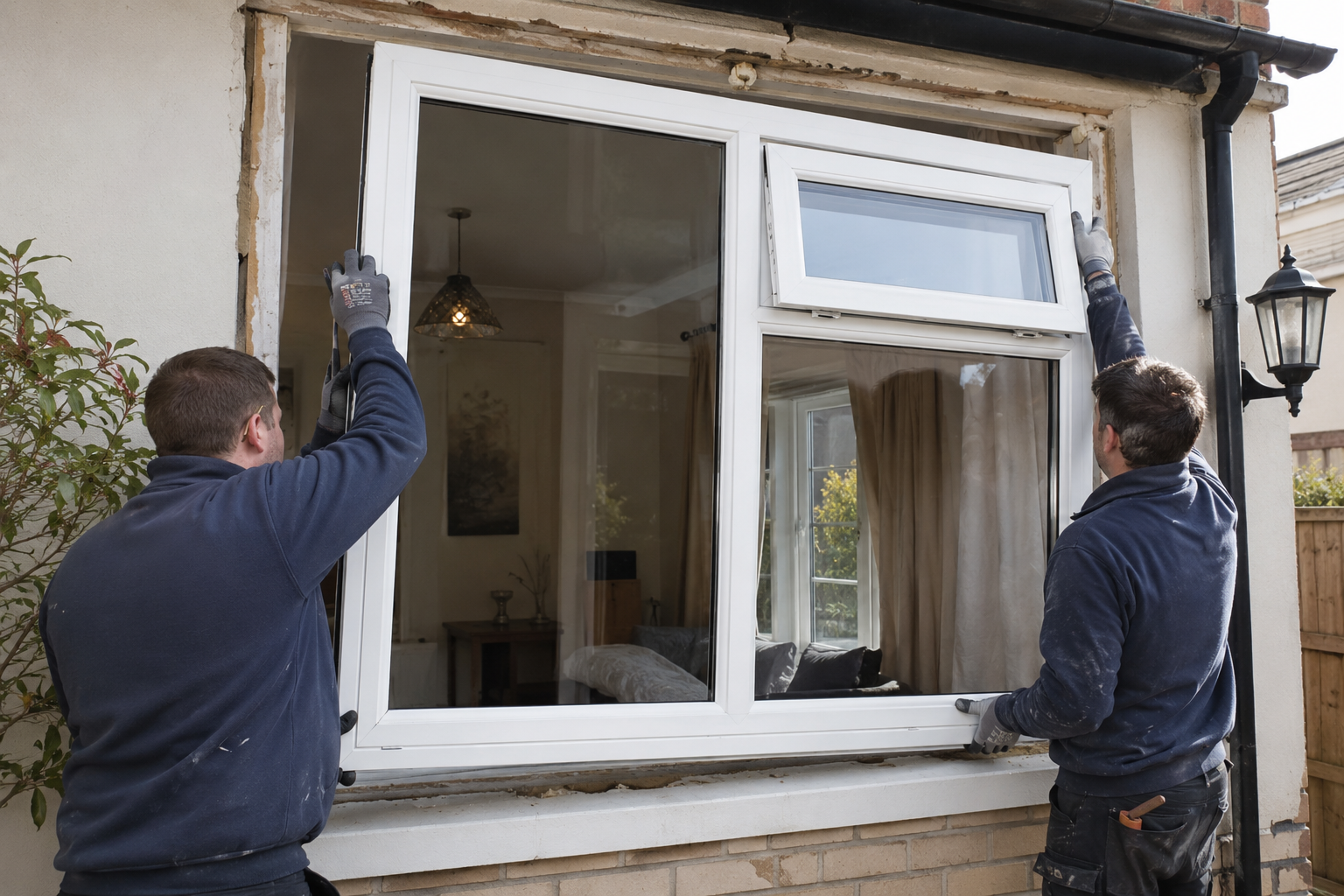
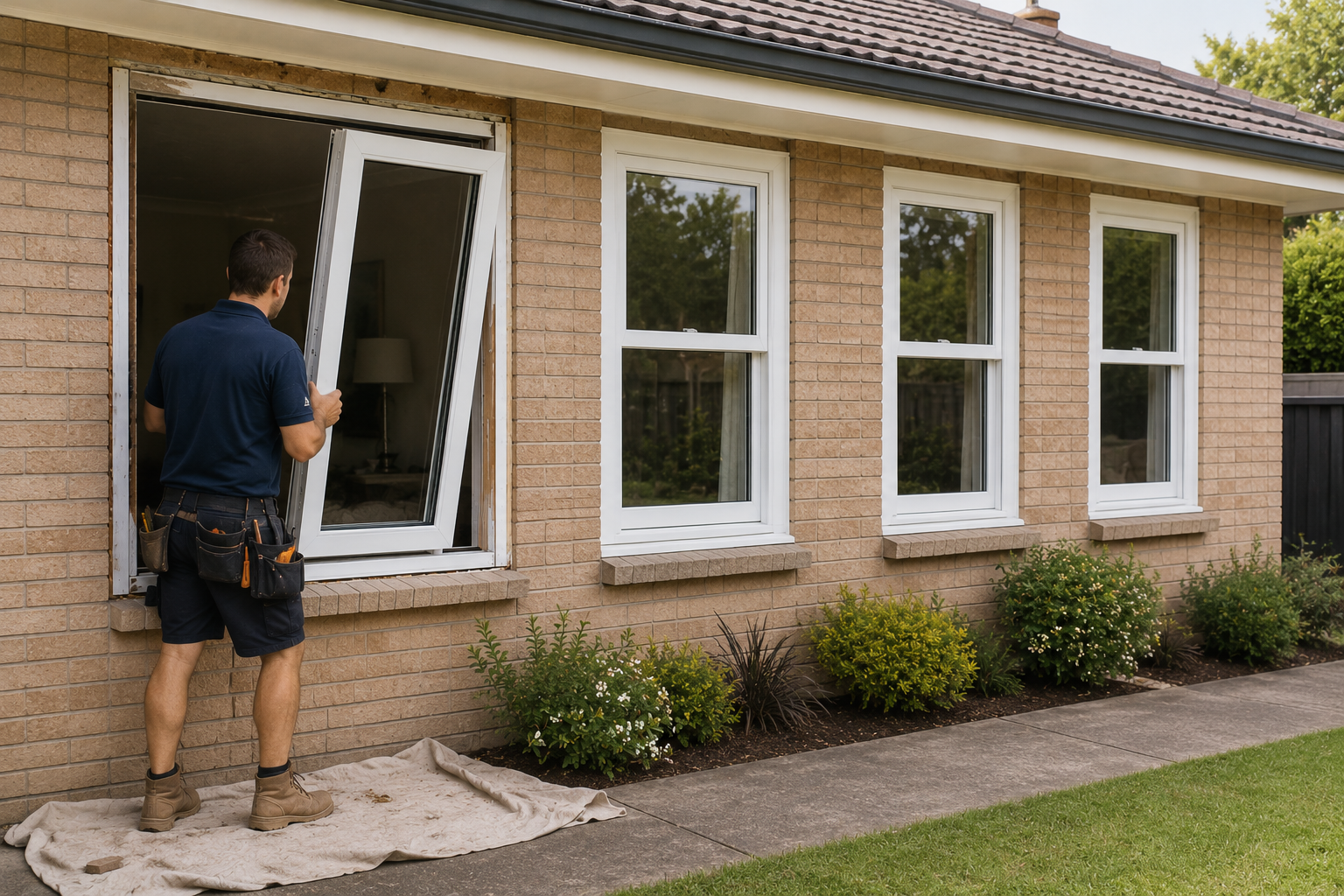
Installation is the short part of the job. Most houses are finished in one to five days on site.
Windows Republic publishes that a typical Melbourne home of ten to fifteen windows is installed within a week. Per opening, a straight swap in a timber framed wall runs about one to two hours. A full frame replacement in double brick, with rendered reveals to cut back, can take half a day
| Job size | Time on site | What usually adds a day |
|---|---|---|
| One or two openings, ground floor | Half a day | An opening that has to be resized or repaired |
| Five to eight openings, single storey | One to two days | Double brick reveals and render to cut back |
| Whole house, ten to fifteen openings | Three to five days | A second storey needing scaffolding or a lift |
| A sliding or stacker door | Half a day to a day per door | Panel weight and preparing the threshold |
Some jobs are reliably slower. Double brick means two skins of masonry to cut instead of one. A second storey needs scaffolding, a lift, or a crew working from inside. Heritage reveals have to stay intact, so the cutting is slow. Doors are their own exercise. A double glazed panel carries the weight of both panes, so a large slider is a two person lift.
One point matters in a Melbourne winter. A crew works one opening at a time and closes it before moving on. The house is rarely open for more than an hour or two in any one room. You lose the warmth from that room for a morning rather than from the whole house for a day.
Making good is the patching and finishing around the opening once the new window is in. Architraves, plasterboard, render and paint. It is also the line most often missing from a window quote.
The Quote Yard’s Victorian cost guide names making good the plaster, render and architraves as the item most commonly left out of window quotes. What it costs is in the 2026 cost guide. What matters here is what it does to your dates.
The windows can be in on day two with the house still weeks from finished. Inside, a plasterboard patch needs two or three coats with drying time between each. Allow a few days before it can be painted. Outside is the longer wait. Sand and cement render needs about 28 days to cure before paint goes on it. Painting early traps moisture in the wall, and the paint fails within months. Acrylic render systems can be coated far sooner. So on a rendered brick house, the exterior paint date can sit a month behind the install date. That is normal.
Timber architraves are the other surprise. If the new frame sits at a different depth to the old one, the original architraves often will not go back on. They get remade, and remade architraves need painting.
Two questions at quote stage. Is making good included, and how far does it go: patched, patched and primed, or patched and painted to match? And who books the plasterer and the painter?
Windows go in at lock-up stage, the point where the house is closed in against the weather. In Victoria that stage has a legal definition. Section 40 of the Domestic Building Contracts Act 1995 sets it as the point where the external wall cladding and roof covering are fixed, the flooring is laid, and the external doors and windows are fixed.
The same section adds four words worth knowing: even if those doors or windows are only temporary. A builder can reach lock-up, and claim the lock-up progress payment, with temporary units in the openings. If your windows are late, that is what happens. The real ones go in afterwards, around trades that have already started.
So count backwards. The check measure on a new build happens once the frame is up and the openings are formed. Add four to eight weeks of manufacturing. That gives you the earliest date your windows can be on site. If it lands after your builder expects lock-up, order sooner or plan for temporary units.
Two more points for owner builders. The bricklayer or cladder usually follows the windows, and the plasterer follows them, so a late window holds up two trades. And the window specification is settled long before any of this, at design and permit stage, because Victoria’s 7-star energy requirement is met largely through the glazing.
Three things move window dates: approvals, access, and changes you make after the measure.
Approvals. If the property sits in a Heritage Overlay, replacing an existing element such as a window can need a planning permit first. Clause 43.01 of the Victorian planning provisions sets that requirement, and councils apply it closely to windows on the street elevation. The statutory decision time is 60 days under the Planning and Environment Act 1987. The clock stops while a council asks for further information or advertises the application, so calendar time regularly runs longer. Check the address on VicPlan before you order anything.
Access. Scaffolding or a lift for upper storey windows has to be hired and booked. That ties your install date to somebody else’s diary. Raise it at quote stage.
Changes. This is the one you control. Once the measurements and the specification reach the factory, changing the colour, the glass or the opening type means a new production slot. A ten minute decision in week three can cost four weeks on the finish date.
Four to eight weeks is the normal range for uPVC double glazed windows made in Melbourne. The count starts at the check measure, because nothing goes into production until the openings are measured. Dark colours, toughened or laminated glass, and bushfire rated units sit at the longer end.
Three to five days on site for a typical house of ten to fifteen openings. Allow up to a week where there is a second storey or double brick. That is the installation alone. From the day you accept the quote, the whole job usually runs eight to twelve weeks.
No. Crews work one room at a time and close each opening before moving on. Pull furniture back about a metre from every window, take down curtains and blinds, and clear a path from the front door. Plan to be out of the room being worked on, rather than out of the house.
Usually an hour or two per opening. The old unit comes out and the new one goes in as one sequence. Openings are not left open overnight. If heavy rain is forecast for the install day, expect a call about moving it.
Yes. Winter is the busiest time to order, though, because demand peaks with the first cold nights and lead times stretch with it. Render and paint also dry more slowly, so making good runs longer. Booking a check measure in late summer gives you more choice of install dates.
The order you settle things in matters more than the dates themselves. Colour, glass and hardware get locked down before the check measure. The check measure sets the production slot. The production slot sets the install week. Only then can you book the plasterer and the painter. That is the booking most people try to make first, and the one most often wasted.
Two things to get in writing on the quote: the manufacturing window in weeks, and what making good covers. Book a check measure with Weatherall Windows and ask for both before you pay a deposit.
