
You're working through the specs for a new build or a serious renovation in Victoria. The rule that came in on 1 May 2024 changed what your windows need to do, and it's the part of the job most people underestimate.
Windows are where a home's thermal compliance is won or lost. Get the glazing right, and double glazed windows do almost all of the heavy lifting on the 7-star rating. Get it wrong and you'll be paying for extra insulation, tighter orientation, and heavier shading to compensate for windows that are bleeding heat out of the building envelope.
Victoria adopted the 2022 National Construction Code, which lifted the minimum thermal performance rating for new homes from 6 stars to 7 stars under the Nationwide House Energy Rating Scheme (NatHERS). NatHERS is the government-backed modelling framework that rates how well a home's fabric keeps heat in during winter and heat out during summer.
At the same time, the code introduced a second test: the Whole-of-Home score. This measures the annual energy use of fixed appliances, including heating and cooling systems, hot water, lighting, and pool or spa equipment, offset by rooftop solar. For a new home in Victoria, the minimum Whole-of-Home score is 60.
Both tests apply to all new Class 1 dwellings, which covers detached houses and townhouses. They also apply to renovations that involve more than 50% of the existing building. Smaller renovations don't legally need to meet the 7-star standard, but the compliance pathway shifts the moment a project crosses that threshold.
The Victorian Building Authority (VBA) enforces the requirements through the building permit process. Sustainability Victoria publishes the practical guidance material and runs the 7-star homes program for builders, designers, and homeowners who want to understand the rules before committing to a design.
Glazing is the weakest thermal link in almost every home. Commonwealth government data indicates that Australian homes can lose up to 40% of their heating energy through windows and doors, and up to 87% of unwanted summer heat comes in the same way. The figures sound extreme until you look at how heat moves through the building envelope.
A typical insulated brick veneer wall in a Melbourne home has a U-value of around 0.45 W/m²K. A single-glazed window with an aluminium frame, standard in Australian homes for decades, has a whole-window U-value of 6.0 W/m²K or higher. That's roughly ten times the heat transfer per square metre. Every poorly specified window is effectively a hole in the insulation.
Most Melbourne homes have a glazing-to-floor-area ratio between 15% and 20%. In open-plan designs with large glass doors or feature windows, the ratio is often higher. Windows occupy a minority of the exterior surface area but account for a disproportionate share of the heat loss and heat gain. When a NatHERS assessor models a design, the glazing specification is the single biggest lever on the star rating.
U-value is the measurement that matters for compliance. It's the rate of heat loss through a building element per square metre per degree of temperature difference between inside and outside. Lower numbers mean better insulation. It's the opposite of the R-value used for walls and ceilings, where higher is better.
Melbourne sits in NCC climate zone 6, a temperate zone with cool winters and warm to hot summers. The heating load is substantial and the cooling load is significant but secondary. That climate balance drives the glazing specification for most 7-star designs in the state.
There isn't one U-value number that guarantees a 7-star rating. The target depends on orientation, shading, room layout, and how the rest of the fabric performs. As a working guide, most 7-star designs in Melbourne need whole-window U-values below 3.0 W/m²K, and many sit below 2.0. Here's what that looks like across common window types:
| Window type | Typical whole-window U-value (W/m²K) | Meets 7-star in Melbourne? |
|---|---|---|
| Single-glazed aluminium | 6.0+ | No, in almost any meaningful window area |
| Standard double-glazed aluminium | 4.0 to 4.5 | Rarely |
| Thermally broken aluminium, double glazed | 2.5 to 3.5 | Sometimes |
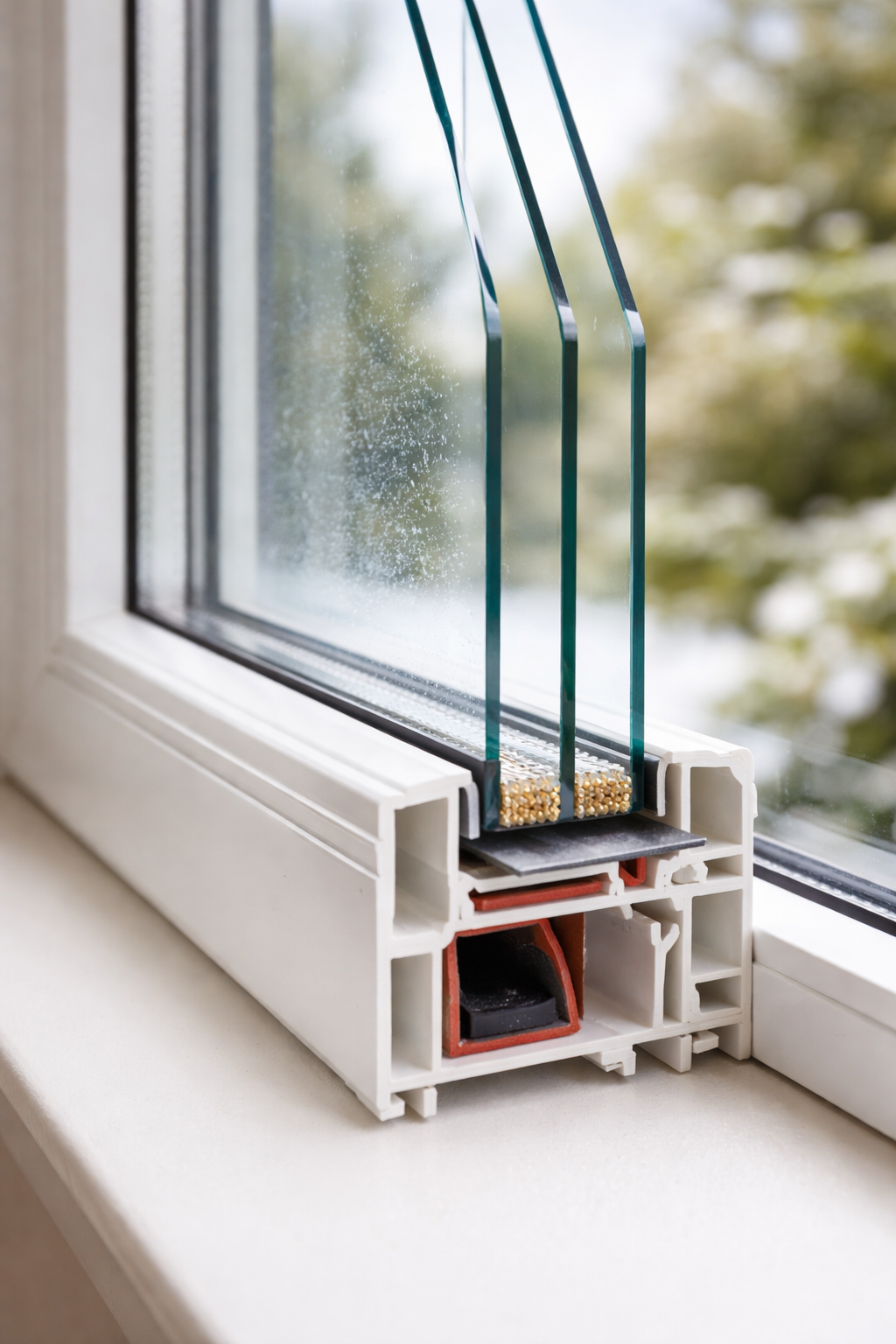
| Double glazed windows in uPVC frames | 2.0 to 2.5 | Usually, with room to spare |
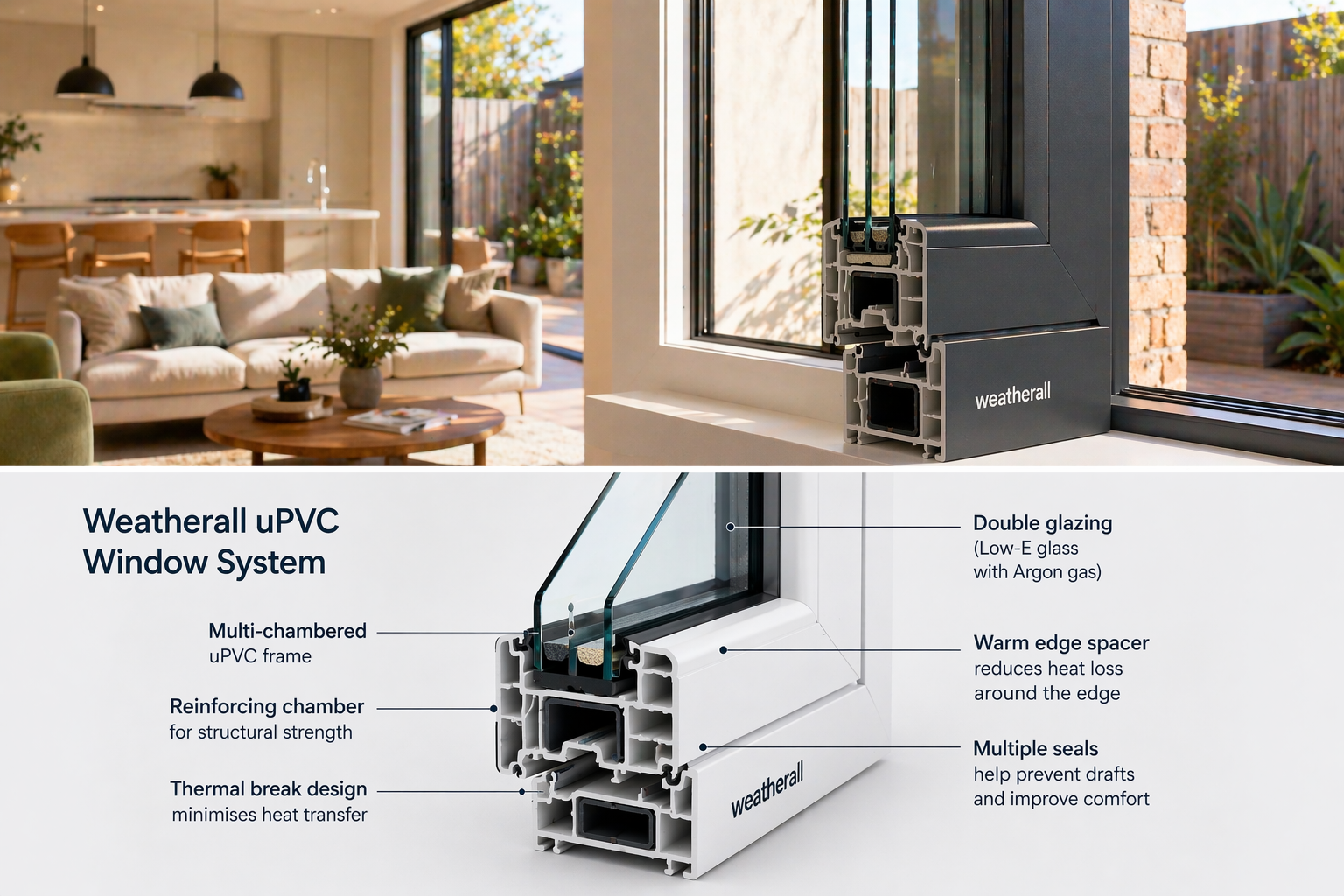
| Low-E uPVC double glazed windows with argon fill | as low as 1.4 | Yes, with significant headroom |
Weatherall manufactures to the 1.4 W/m²K end of that range when the specification calls for it. That's a meaningful buffer above the usual 7-star requirement, which matters when a design has a lot of glass or when the orientation isn't ideal.
One trap to watch for: the number a builder or supplier quotes might be the centre-of-glass U-value, which ignores the frame. The frame can be 20% to 30% of the total window area, and aluminium frames conduct heat fast enough to drag the whole-window U-value up by a full point or more. Always work with whole-window figures when comparing products and checking the NatHERS report.
NatHERS assessors see the same problems show up in designs that miss 7 stars. Most of them come back to glazing.
Large west-facing windows without shading are the most common failure. West walls take the heaviest afternoon sun load in Melbourne summers, and unshaded glass turns the living area into a heat trap between 3pm and 7pm. External shading, overhangs, or high-performance glass with a low solar heat gain coefficient can fix this, but designs that ignore it will fail the cooling-load calculation.
Aluminium frames specified to save money on the fenestration package. The upfront saving is usually a few thousand dollars. The trade-off is a whole-window U-value that forces the design to compensate elsewhere, often with more insulation, heavier external shading, or smaller windows than originally drawn.
Single-glazed skylights and roof windows. Skylights have some of the highest heat loss rates per square metre of any building element. A single-glazed skylight can undo the performance of several surrounding windows.
Sliding doors with poor seal performance. Large sliders are a feature of most modern Australian homes, and the weak point is usually the perimeter seal. Lift-and-slide and tilt-and-slide systems seal more tightly than standard sliders, which matters for both the thermal rating and the air infiltration figure.
The 7-star rule applies in full to new homes and to renovations that touch more than 50% of the existing building. Below that threshold, compliance isn't legally required, but the principles still apply to how the finished home will perform.
For a full renovation or a new build, the NatHERS assessment happens early in the design phase. The glazing specification, orientation, and shading all feed into the rating. Changes after permit approval are possible but often expensive, because they can trigger a re-assessment and re-submission.
For smaller renovations, such as a kitchen extension or a rear addition, the compliance rules don't apply. If you're already opening up a wall to install new windows, upgrading from single-glazed aluminium to double glazed windows typically delivers a 40% to 50% reduction in heat transfer through that glazing. For homes built to the old 5-star or 6-star standards (or earlier, with no star rating at all), that's often the single highest-impact thermal upgrade available.
If you're in the design phase for a Melbourne home, these three questions will tell you quickly whether the glazing has been handled properly.
Glazing is the part of a build where early decisions set the ceiling for everything else. Once the design is approved and the permit is issued, changing the window specification almost always means redrawing, re-modelling, and re-submitting. That's expensive. Deciding the glazing early, with the NatHERS target in mind, turns the rating into a feature of the build rather than a problem to fix at the end.
Weatherall manufactures uPVC double glazed windows, triple glazed windows, and doors from the Campbellfield facility, with products modelled to NatHERS specifications and BAL ratings up to BAL 40 for bushfire-prone areas. If you're planning a new build or a substantial renovation in Melbourne or regional Victoria, book a consultation with the technical team and bring your plans. We'll run the glazing options against your design before the specifications are locked.
