
It is mid-December. The air conditioner is humming, trying to keep the living room below twenty-four degrees. If you walk over to a standard aluminium window in your house right now and put your hand on the frame, it will be hot.
Not just warm. Uncomfortably hot.
This is the physical reality of building with metal in Australia. We spend thousands of dollars on high-performance insulation and double glazing to stop heat entering our homes, then we wrap that glass in aluminium.
Aluminium is one of the most conductive materials on earth. In a climate where we spend half the year trying to keep the heat out, using it for window frames is a thermal failure.
Metal moves heat. That is why we use it for frying pans and radiators. When the Australian sun hits the outside of a dark aluminium window frame, the metal absorbs that energy and conducts it directly inside.
In the building industry, this is called a thermal bridge. It acts as a highway for heat to bypass your wall insulation.
You can have the best batts in the walls and expensive glass in the sash, but if the frame is aluminium, you have broken the thermal seal of your home. The frame becomes a radiator, actively heating the air inside your house long after the sun has gone down.
uPVC does not do this. It is a non-conductive material. If it is scorching hot outside, the inside of a uPVC frame remains neutral. It acts as a barrier, not a bridge.
To understand why this matters, you have to look at how materials handle energy. The difference isn't marginal; it is massive.
| Feature | Standard Aluminium Window | uPVC Window |
|---|---|---|
| Heat Conductivity | Extremely High | Extremely Low |
| Touch Temperature | Hot to the touch | Neutral / Room Temp |
| Thermal Break | Rare in standard ranges | Built-in by design |
| Condensation | High (Metal sweats) | Low |

There is a persistent belief that metal is stronger than plastic. In structural terms, steel is strong. But in window fabrication, standard aluminium frames are often hollow, lightweight extrusions held together with mechanical joints.
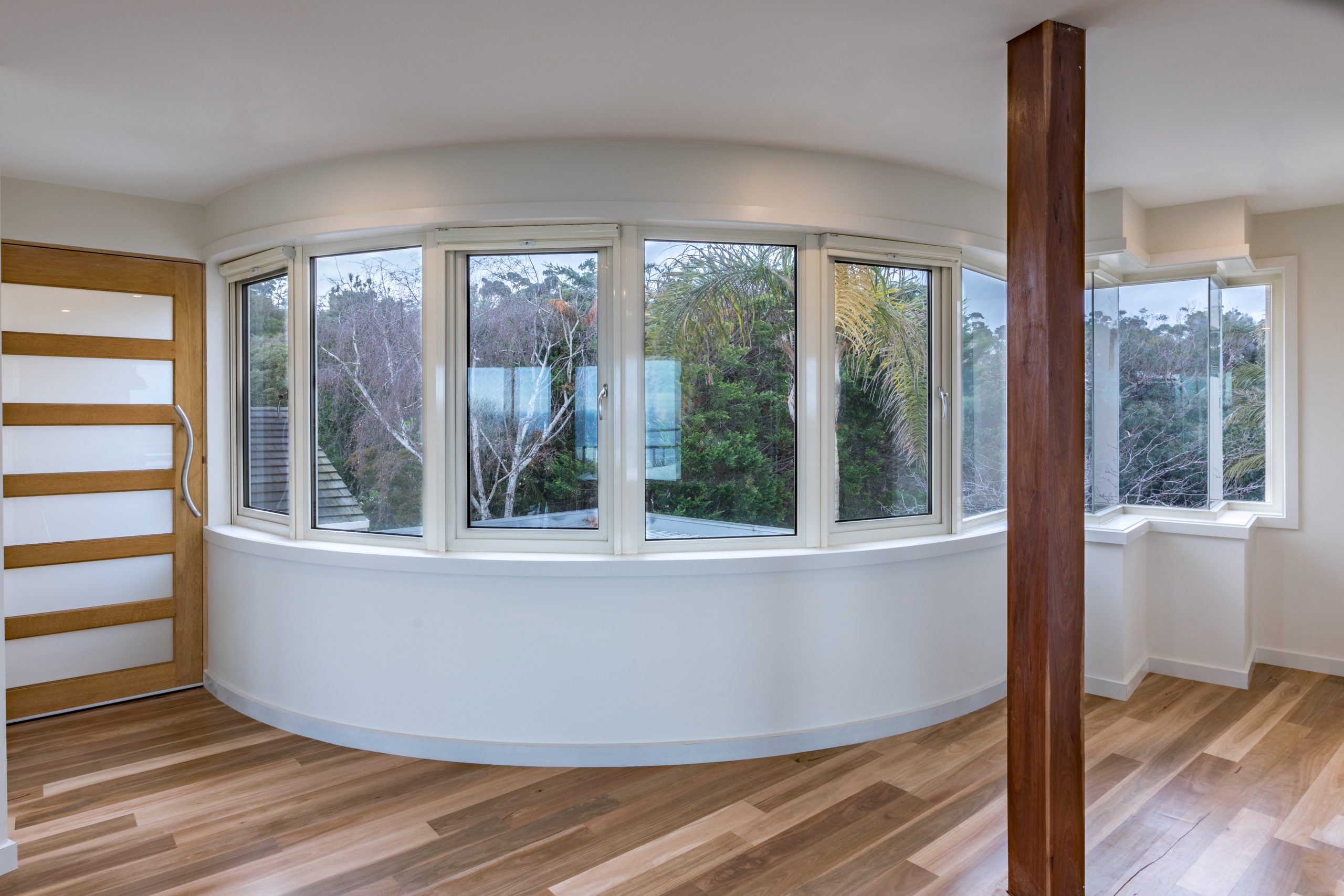
Modern uPVC windows, like our Tilt & Turn range, are steel-reinforced. They use a multi-chambered design that provides rigidity without the thermal penalty.
More importantly, uPVC is stable. Aluminium expands and contracts significantly with temperature changes. In the violent swing of a Melbourne summer—where a cool change can drop the temperature by fifteen degrees in an hour—metal frames move. This movement stresses seals and can lead to drafts over time.
uPVC is designed to handle UV exposure and temperature shifts without transferring that stress to the building fabric.

Heat is the primary enemy in December, but noise is the constant battle.
Because aluminium is light and rigid, it vibrates. It transmits sound waves from the street effectively. uPVC is denser. It has a dampening effect. When you close a Casement Window with a uPVC frame, it creates a solid, acoustic seal that metal frames struggle to match.
If you are renovating this summer, stop looking at the glass and start looking at the frame. If the material feels like a frying pan, it shouldn't be in your wall.
No. This was a problem with cheap plastics in the 1980s. Modern uPVC windows sold in Australia contain Titanium Dioxide (TiO2), a stabiliser that prevents UV degradation. They are formulated specifically for high-UV climates.
Standard residential aluminium windows are generally cheaper upfront. However, thermally broken aluminium (which tries to fix the heat problem) is often more expensive than high-quality uPVC.
Yes. You can get uPVC frames in various foils, including black, grey, and timber effects. These foils are bonded to the frame and are designed to withstand Australian heat.
Quality uPVC windows are steel-reinforced internally. They do not warp or twist in standard Australian weather conditions. They are engineered to maintain their shape and seal integrity in extreme temperatures.
